
A buying agent’s guide to the best places to live in London for good schools: the areas families choose for independent, state and grammar schools, what a family house costs in each, how catchment distances really work and when to buy, with sold prices from HM Land Registry and examples from our own case files.
The short answer Independent-school families cluster in Hampstead and Highgate, Barnes and Hammersmith, Wimbledon, Dulwich and Battersea. For state schools, Savills’ November 2025 ranking put Richmond Park first in England and Sutton and Cheam joint second, with six more London seats in the top ten. Grammar schools sit only in seven outer boroughs: Sutton, Kingston, Barnet, Bexley, Bromley, Redbridge and Enfield. For state schools, the address has to be in before the application deadline; for independent schools, many families secure a place first, or buy within reach of two or three schools they would be happy with.
Key Takeaways
Independent schools admit by assessment, so the school run decides where families buy. Good state schools are oversubscribed and places usually go by how close you live, so the house and the school decision are the same decision.
1st
Richmond Park’s ranking for state primary and secondary results in England (Savills, 2025)
19
State grammar schools in London, all in seven outer boroughs (Department for Education)
358 m
Furthest distance offered at Earlsfield Primary, Wandsworth, in April 2026
- Check the last distance offered, not a catchment map. Most London state schools rank applicants by straight-line distance once siblings are placed, and the cut-off moves every year.
- For independent schools, don’t buy on the strength of one school. A house does not secure a place, so either secure the place first or buy within reach of more than one school.
- For state schools, buy before the deadline. Secondary applications close on 31 October and primary applications on 15 January, and councils use the address where your child lives when you apply.
- Expect to pay more. Savills found homes in the best 10% of areas for school results cost 28% more than their regional average.
- Some of the best family houses never reach the portals. Several of the school-led purchases below were bought before they were advertised.
Jump to: The best areas · Independent day schools · House prices · Grammar schools · State or independent · Catchment areas · When to buy · London or the commuter belt · Buying for a school · FAQs
The best places to live in London for good schools
We have ranked the areas below in two steps. The first seven are the London areas that score best in Savills’ analysis of state school results, which looked at Key Stage 2 (end of primary) and Key Stage 4 (GCSE) results for the pupils living in each parliamentary constituency, and at how many local schools sit in the top and bottom fifth nationally. The last three are where our own clients most often buy for independent schools or a particular primary. Savills’ London results look like this:
| Constituency | Position in England | Average house price |
|---|---|---|
| Richmond Park | 1st | £1,016,265 |
| Sutton and Cheam | Joint 2nd | £518,988 |
| Chipping Barnet | Top 10 | £679,549 |
| Kensington | Top 10 | £2,004,641 |
| Chelsea and Fulham | Top 10 | £1,594,958 |
| Hammersmith | Top 10 | £837,741 |
| Twickenham | Top 10 | £754,580 |
| Ealing Central and Acton | Top 10 | £796,195 |
| Finchley and Golders Green | Top 25 | £1,030,523 |
| Wimbledon | Top 25 | £891,022 |
| Orpington | Top 25 | £546,058 |
1. Richmond, Barnes and East Sheen
Richmond Park, which takes in Richmond, Barnes, East Sheen, Kew and Kingston’s northern edge, came first in England for both primary and secondary results. State secondaries include Grey Court School in Ham, Richmond Park Academy in East Sheen and Christ’s School in Richmond, and Tiffin School and The Tiffin Girls’ School, two of London’s grammar schools, are in neighbouring Kingston. St Paul’s School, the independent boys’ school, is on the river in Barnes. Family houses are expensive: the median house sold in Barnes (SW13) in the year to September 2026 went for £1.42 million, and £1.22 million in East Sheen (SW14). Our comparison of Hampstead, Dulwich and Richmond covers Richmond’s streets and lifestyle in more detail.
2. Sutton and Cheam
Sutton and Cheam came joint second in England and is the best value of the leading areas: Savills’ average price there, £518,988, is 23% below the London average. Sutton has five of London’s 19 grammar schools: Sutton Grammar School, Nonsuch High School for Girls, Wallington County Grammar School, Wallington High School for Girls and Wilson’s School, and several of them share a first-stage test. Greenshaw High School, a comprehensive, also offers some places through the Sutton test. A house in Cheam (SM3) had a median sold price of £575,000 over the past year, and £861,000 in the SM2 district south of Sutton town centre, where more of the larger detached houses are.
3. Barnet, Finchley and Hampstead Garden Suburb
Chipping Barnet made Savills’ top ten, and Finchley and Golders Green its top 25. Barnet has three grammar schools: Queen Elizabeth’s School for boys in Barnet, The Henrietta Barnett School for girls in Hampstead Garden Suburb, and St Michael’s Catholic Grammar School for girls in North Finchley. North London’s leading independent schools, including Highgate, Channing and University College School, are a short drive south. Prices rise towards the Suburb: the median house in Barnet (EN5) sold for £732,500, in Whetstone and Totteridge (N20) for £974,000, and in Golders Green and Hampstead Garden Suburb (NW11) for £1.16 million.
From our case files: A family renting in north London, with two children at Channing School in Highgate, wanted a detached four-bedroom house within a 20-minute drive of the school. They had already lost one house to competing bids. We searched from Highgate and Hampstead out to Totteridge, Barnet and Hadley Wood, and found a detached house on Southway in Hampstead Garden Suburb, under ten minutes’ drive from Channing, before it was launched to the market. Despite two other interested buyers, our clients bought it for £2,895,000 in September 2023.
4. Fulham
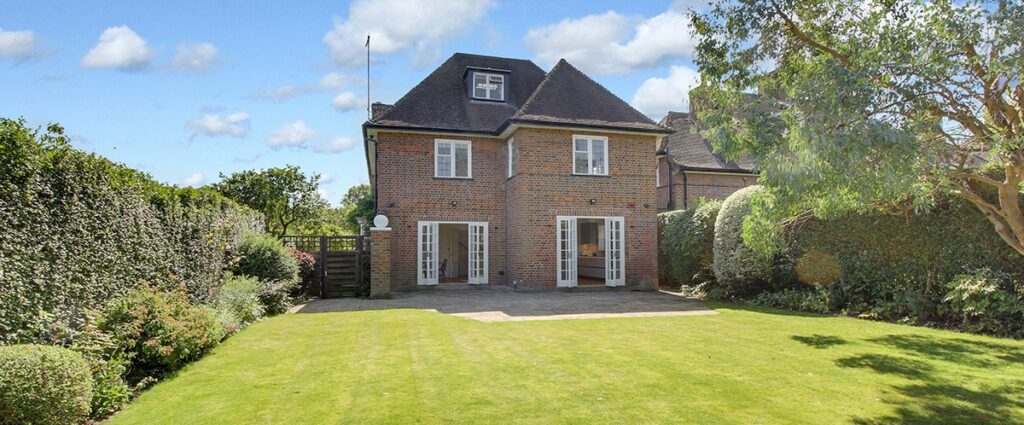
Chelsea and Fulham made Savills’ top ten. Fulham gives families more house for their money than Chelsea, with long streets of Victorian terraces in the SW6 district, where the median house sold for £1.68 million in the past year. Popular state secondaries include The London Oratory School, a Catholic boys’ school, and Lady Margaret School, a Church of England girls’ school in Parsons Green. St Paul’s Girls’ School and Godolphin and Latymer, both independent, are a short journey away in Hammersmith.
From our case files: A young family wanted to move into the catchment of their preferred school in Fulham, and needed a house in good enough condition to move into before the new school year. We got them in to see a refurbished and extended house of more than 1,700 sq ft on Gilstead Road as soon as it came up for sale, and agreed the purchase against a competing bid at £1,686,500 in July 2026.
5. Hammersmith, Chiswick and Ealing
Hammersmith and Ealing Central and Acton both made Savills’ top ten, and Chiswick sits between them. Hammersmith has a cluster of independent schools, including St Paul’s Girls’ School, Godolphin and Latymer and Latymer Upper, and state options such as Sacred Heart High School, a Catholic girls’ school. Twyford Church of England High School is in Acton. The median house sold for £1.33 million in Chiswick (W4), £1.27 million in Hammersmith (W6) and £1.0 million in Ealing (W5).
From our case files: Clients who had rented in Chiswick for several years knew exactly which streets they wanted, and had four months before their tenancy ended. We found an end-of-terrace house on Fairfax Road in the Bedford Park conservation area, close to well-regarded schools, that was offered to buyers for only three days and never advertised. Another buyer bid as well, and we agreed the purchase for our clients at £3,750,000 in March 2026.
6. Twickenham and Teddington
Twickenham was another of Savills’ top ten, with an average price of £754,580. Its state secondaries include Waldegrave School for girls, Orleans Park School, Teddington School and Turing House, and Lady Eleanor Holles and Hampton School, both independent, are in Hampton. Houses are cheaper than in Barnes or Richmond: the median was £1.12 million in Twickenham (TW1) and £948,750 in Teddington (TW11).
7. Wimbledon
Wimbledon made Savills’ top 25 and has a wide choice of state and independent schools. State secondaries include Ricards Lodge High School for girls, Rutlish School for boys, and two Catholic schools, Ursuline High School and Wimbledon College. King’s College School and Wimbledon High School are the best-known independents. The median house in SW19 sold for £1.03 million, but the large detached houses around the Village and Common sell for several times that.
From our case files: A family who had built a house in Cobham, Surrey, wanted their son to be able to walk to his school in Wimbledon. The first house we previewed was ideal, less than five minutes’ walk from the school, the Common and the Village, but its owner decided not to sell. Six months later he changed his mind, and our clients were the first through the door. They offered the asking price so that the house never reached the open market, and bought Murray Road, 5,278 sq ft, for £7,500,000 in November 2022.
8. Wandsworth, Battersea and Clapham
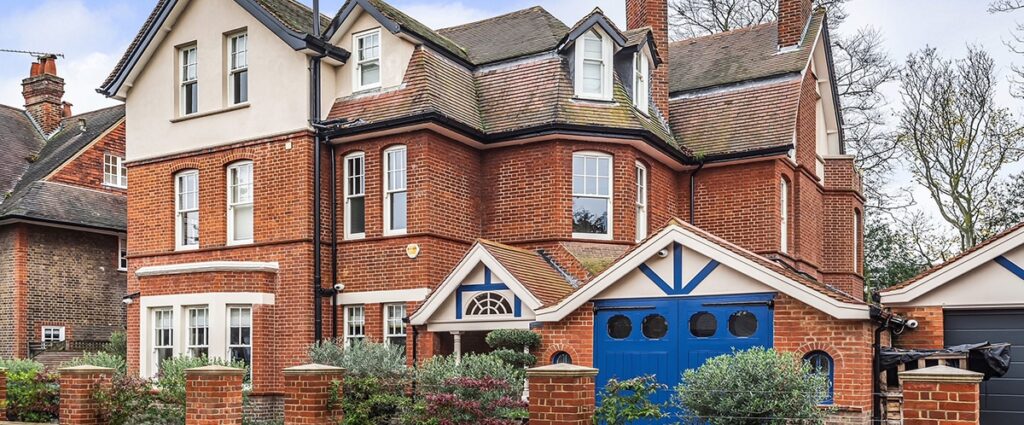
Battersea, Wandsworth and Clapham are not in Savills’ top 25, but they are where many of our clients with young children buy, for the commute, the commons and a set of heavily oversubscribed primary schools. Competition is about distance: in 2026, Wandsworth Council’s figures show Sheringdale Primary filled its last places within 354 metres and Earlsfield Primary within 358 metres. At secondary level, Graveney School and Burntwood School offer some places through the Wandsworth Year 6 Test, and Emanuel School and Thomas’s Battersea are among the independents. Median house prices were £1.21 million in Battersea (SW11), £1.23 million in Wandsworth and Earlsfield (SW18) and £1.26 million in Clapham (SW4).
From our case files: Clients with only a week in the UK asked us to search Queens Park, Fulham, Ealing and Battersea for a four-bedroom freehold house, working alongside their education consultant. Battersea became the focus because of one particular school. We found an off-market house on Cambridge Road near Battersea Park and agreed it at 6% below the guide price, £2,250,000, in March 2026. In Clapham, a family returning from Europe chose between West Hampstead and Clapham for their preferred schools, and we found them a 5,500 sq ft house on Clapham Common West Side. They exchanged within three weeks, at £5,500,000, in January 2024.
9. Dulwich
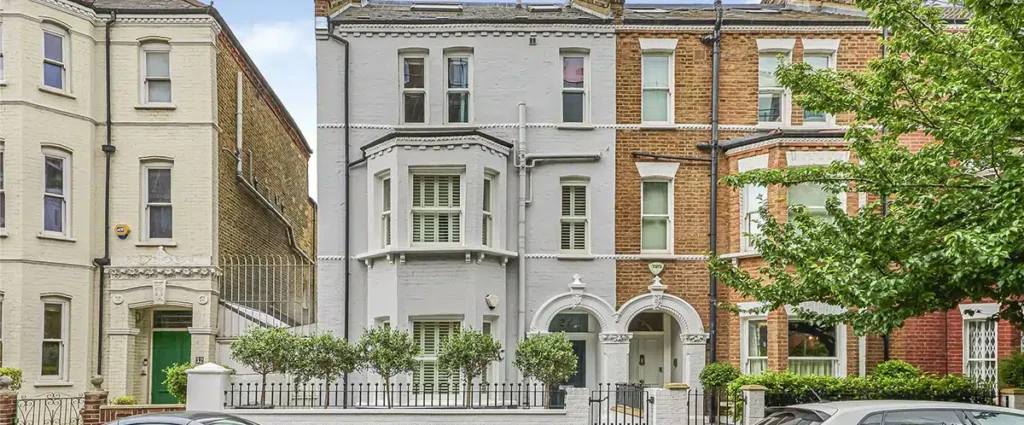
Dulwich is chosen above all for its independent schools: Dulwich College, James Allen’s Girls’ School (JAGS) and Alleyn’s are all within a short walk of Dulwich Village. State options include Dulwich Hamlet Junior School and Kingsdale Foundation School. Family houses cost less than in Hampstead or Richmond: the median house in SE21 sold for £1.23 million and in East Dulwich (SE22) for £1.13 million.
From our case files: A young family upsizing from a flat wanted a house around Dulwich Village. Through a long relationship with the selling agent, we got them in to see an end-of-terrace house on Druce Road before it was listed, and agreed £1,950,000, £50,000 below the asking price, in June 2026. For a family relocating from the US on a £1.5 million budget, we narrowed a brief covering Dulwich and Wimbledon to Dulwich and Tulse Hill, and bought a house on Kingsmead Road with room to extend for £1,075,000, 10% below the asking price, in August 2025.
10. Hampstead and Highgate
Hampstead and Highgate have more leading independent schools than anywhere else in north London: University College School and South Hampstead High School in Hampstead, and Highgate School and Channing in Highgate. The Camden School for Girls and Highgate Wood School are among the state secondaries. This is the most expensive area in the list. The median house in Hampstead (NW3) sold for £2.62 million and in Highgate (N6) for £2.10 million, which is why many families look a little further out, to West Hampstead or Hampstead Garden Suburb.
From our case files: First-time buyers with a baby due in April and a tenancy ending in August needed a family house within walking distance of their nursery school in West Hampstead. Twelve weeks after instructing us, they exchanged on a house of more than 2,000 sq ft on Dornfell Street for £1,650,000.
Choosing between these areas? We can tell you which streets fall within recent cut-offs for the schools on your list before you start viewing. Talk to our search team
London’s leading independent day schools and where families buy
Most of our clients send their children to independent schools. These schools offer places through registration, assessment and interview, not by address, so there is no catchment area to buy into. The daily school run still decides where most families live, and London’s leading day schools sit in a few clear clusters:
| Area | Leading independent day schools | Where families buy |
|---|---|---|
| North London | Highgate School (co-educational), University College School (co-educational), Channing School (girls), South Hampstead High School (girls), North London Collegiate School in Edgware (girls), ASL (American School London) | Hampstead, Highgate, Belsize Park, Hampstead Garden Suburb |
| West London | St Paul’s School in Barnes (boys), St Paul’s Girls’ School (girls), Latymer Upper School (co-educational), The Godolphin and Latymer School (girls), Notting Hill and Ealing High School (girls) | Barnes, Brook Green, Chiswick, Fulham, Ealing |
| South-west London | King’s College School (boys), Wimbledon High School (girls), Putney High School (girls), Ibstock Place School (co-educational), Hampton School (boys), Lady Eleanor Holles School (girls), Kingston Grammar School (co-educational) | Wimbledon, Putney, Richmond, Teddington, Kingston |
| South London | Dulwich College (boys), James Allen’s Girls’ School (girls), Alleyn’s School (co-educational), Emanuel School (co-educational), Thomas’s Battersea (co-educational, to 13) | Dulwich, East Dulwich, Herne Hill, Battersea, Clapham |
| Central London | Westminster School (co-educational), City of London School (boys), City of London School for Girls (girls), Francis Holland School, Regent’s Park and Sloane Square (girls) | Chelsea, Belgravia, Marylebone, Islington |
Because a house does not secure a place, the risk runs the other way: a family can buy near a school and then not be offered a place. Families usually handle this in one of two ways. Some secure the place first and buy afterwards, renting in between if they need to. Others buy within an easy school run of two or three schools they would be happy with, so the house still works whichever offer comes through. Entry points and registration dates vary from school to school, and the most competitive schools can assess children well over a year before they start, so check each school’s admissions page before you set a moving date.
House prices in London’s best school areas
Sold prices from HM Land Registry’s price paid records show what a family house costs in each area. The figures are medians for houses (detached, semi-detached and terraced), since flats pull the overall average down in most of these postcodes:
| Area | Postcode | Houses sold | Median house price |
|---|---|---|---|
| Hampstead | NW3 | 81 | £2.62m |
| Highgate | N6 | 51 | £2.10m |
| Fulham | SW6 | 193 | £1.68m |
| Barnes | SW13 | 118 | £1.42m |
| Chiswick | W4 | 231 | £1.33m |
| Hammersmith | W6 | 85 | £1.27m |
| Clapham | SW4 | 108 | £1.26m |
| Wandsworth and Earlsfield | SW18 | 277 | £1.23m |
| Dulwich | SE21 | 71 | £1.23m |
| East Sheen | SW14 | 108 | £1.22m |
| Battersea | SW11 | 231 | £1.21m |
| Hampstead Garden Suburb and Golders Green | NW11 | 115 | £1.16m |
| East Dulwich | SE22 | 138 | £1.13m |
| Twickenham | TW1 | 166 | £1.12m |
| Richmond, Ham and Petersham | TW10 | 85 | £1.10m |
| Wimbledon | SW19 | 361 | £1.03m |
| Ealing | W5 | 169 | £1.00m |
| Whetstone and Totteridge | N20 | 111 | £0.97m |
| Kingston and Coombe | KT2 | 165 | £0.95m |
| Teddington | TW11 | 170 | £0.95m |
| Finchley | N3 | 85 | £0.92m |
| Sutton (south) | SM2 | 127 | £0.86m |
| Barnet | EN5 | 196 | £0.73m |
| Woodford Green | IG8 | 228 | £0.66m |
| Orpington | BR6 | 451 | £0.62m |
| Cheam | SM3 | 157 | £0.58m |
A house near a sought-after school usually costs more than the district median suggests. Our guide to how London schools affect the prime property market looks at the price premium in more detail, and at how it shows up in rents.
Which London boroughs have the best grammar schools?
London has 19 state grammar schools, and all of them are in seven outer boroughs. Inner London has none. The list below follows the Department for Education’s register of schools, which records each school’s admissions policy:
| Borough | Grammar schools | Where families buy |
|---|---|---|
| Sutton (5) | Sutton Grammar, Nonsuch High School for Girls, Wallington County Grammar, Wallington High School for Girls, Wilson’s | Cheam, Sutton, Wallington |
| Bexley (4) | Bexley Grammar, Beths Grammar, Chislehurst and Sidcup Grammar, Townley Grammar | Bexley Village, Sidcup, Bexleyheath |
| Barnet (3) | Queen Elizabeth’s School, The Henrietta Barnett School, St Michael’s Catholic Grammar | Barnet, Finchley, Hampstead Garden Suburb |
| Kingston upon Thames (2) | Tiffin School, The Tiffin Girls’ School | Kingston, Surbiton, Coombe |
| Bromley (2) | Newstead Wood School, St Olave’s and St Saviour’s Grammar | Orpington, Petts Wood |
| Redbridge (2) | Ilford County High School, Woodford County High School | Woodford Green, Ilford |
| Enfield (1) | The Latymer School | Winchmore Hill, Southgate |
The outer boroughs are also where grammar school access costs least. The median house sold for £615,000 in Orpington and £663,250 in Woodford Green, less than half the price of a house in Barnes or Fulham, and Orpington and both Ilford seats appear in Savills’ top 25.
Any child can register for the 11+ (11 plus) in London, wherever they live, but where you live often decides who gets the places once enough children have passed. ElevenWise found that 50 of the 52 grammar and partially selective schools in and around London give priority by catchment area or distance for some or all of their places. Registration for most tests closes in the spring or summer of Year 5, and most tests are sat in September at the start of Year 6, a few weeks before the council application is due.
State or independent: how the choice changes where you buy
Families choosing state schools have to buy close to them, and be living there before the application deadline. Families choosing independent schools are freer, and often secure the place before they buy, but still tend to buy within an easy school run, which is why clusters such as Dulwich, Hampstead and Wimbledon hold their prices. Since 1 January 2025, VAT has been charged on private school fees, and Lucian Cook, head of residential research at Savills, expects more families to look at the best state schools as a result: “there is likely to be a steady rise in families looking to access the best state schools over time, putting further pressure on surrounding home values.”
Many of our clients keep both options open, buying within reach of a strong state primary and of the independent schools they may choose at 11. Our guide to the UK schooling system explains how the stages and the different types of school fit together.
When you compare schools, read the full Ofsted report. Ofsted stopped giving a single overall grade such as “outstanding” in September 2024, and since 10 November 2025 its report cards grade each area separately, on a scale from “exceptional” to “urgent improvement”. Many schools will still show an older report until their next inspection.
How do school catchment areas work when buying a house in London?
What is a catchment area?
A catchment area is the area a school or council gives priority to when places are allocated. In London, most schools do not have a fixed boundary. When a school has more applicants than places, it ranks children by its admission criteria, which usually put children in care first, then brothers and sisters of current pupils, and then children who live closest, measured in a straight line from home to school. Faith schools may rank by religious practice, and some schools use named priority areas instead of, or as well as, distance.
So the effective catchment is the distance the last child offered a place lived from the school, known as the last distance offered. It changes every year with the number of applicants and siblings. Wandsworth Council’s records for three popular primaries show how far it can move:
| Primary school | 2023 | 2024 | 2025 | 2026 |
|---|---|---|---|---|
| Earlsfield Primary | 248 m | 414 m | 411 m | 358 m |
| Sheringdale Primary | 384 m | 396 m | 306 m | 354 m |
| Chesterton Primary | 2,193 m | 1,596 m | 1,531 m | 5,447 m |
In 2023, 40 of Earlsfield’s 60 reception places went to siblings and the last place was offered 248 metres away; in 2026, siblings took 28 places and the cut-off widened to 358 metres. A house at 300 metres would have missed out one year and been comfortably inside the next.
Does buying inside a catchment area guarantee a place?
No. Living close improves your chances, but a place depends on how many siblings and other higher-priority children apply that year. Councils check addresses carefully. Lambeth’s admission arrangements, for example, say an application can be withdrawn if it uses an “address of convenience”, which includes renting a second home near a school for a short time while keeping another, and the same council measures distance only from where the child actually lives.
How do I check a school’s last distance offered?
Councils publish allocation figures for the schools they co-ordinate, usually on their school admissions pages and in their admissions booklets. Look at three or four years, not just the latest, and check whether the school has a faith or priority-area criterion that changes who counts. For a school you are serious about, measure the straight-line distance from the house itself, because a difference of 50 metres can matter.
When should we buy to be in time for school applications?
Ideally, you should be living in the house before you apply. London councils co-ordinate applications through the Pan-London eAdmissions system, and the national timetable is fixed:
| Secondary (Year 7) | Primary (Reception) | |
|---|---|---|
| Applications open | 1 September | September |
| Deadline | 31 October | 15 January |
| Offers sent | 1 March | 16 April |
In practice, that means agreeing a purchase in the spring or early summer before you apply, to leave time for exchange, completion and the move. For secondary entry in September 2028, aim to be in the house before applications close on 31 October 2027. If you are moving from abroad, Lambeth’s rules show the risk of cutting it fine: an overseas address is accepted, but distance cannot be measured from the new London home until the child lives there, so an application can end up at the bottom of its criterion.
Searches for catchment areas peak in December, January and March each year, just before primary deadlines and around secondary offer day. Starting your search before then means less competition for the best houses.
London or the commuter belt?
Some families find they can buy a larger house with a garden near good state schools by moving just outside London. Savills’ leading areas outside the capital include South West Surrey, Epsom and Ewell, St Albans, and Hitchin and Harpenden, and the counties have far more grammar schools than London: the same government register lists 32 in Kent and 13 in Buckinghamshire. Our guide to the best commuter villages near London compares the villages and towns families move to, with sold prices and train times.
Buying a house for a school: what a buying agent does
A school-led search has a deadline and a hard boundary, and the houses inside that boundary are the ones every other family wants. That changes how you buy:
- Start from the school, not the house. We map the recent cut-offs and priority areas for every school on your list, so we only show you houses that work for the application.
- See houses before they are advertised. Many of the family houses on the best streets sell through agents’ contacts first. Our guide to London’s off-market homes explains how it works.
- Work back from the deadline. Most of the purchases in this guide were planned around a school year or an application date, so we line up solicitors and surveyors from the start.
- Plan for viewing trips. Clients moving from abroad often have a week or less in London, so we preview every house first and arrange the best ones into a few days. Our guide to relocating from the US to London covers the rest of the move.
Over the last 20 years we have helped dozens of families move to different parts of London and to the countryside because of schools. Schools play such an integral part in any house move, so an in-depth understanding of how the UK school system works is vital. It also helps that everyone in Black Brick’s buying team has children and has been through this process themselves. We work closely with expert schools advisers from our little black book of trusted contacts to help clients narrow down which schools are right for their child.
Camilla Dell, Managing Partner of Black Brick
Frequently Asked Questions
Richmond Park, which covers Richmond, Barnes, East Sheen and Kew, came first in England for state primary and secondary results in Savills’ November 2025 ranking. Sutton and Cheam came joint second, and six more London constituencies made the top ten: Chipping Barnet, Kensington, Chelsea and Fulham, Hammersmith, Twickenham and Ealing Central and Acton. For independent schools, the leading day schools cluster in Hampstead and Highgate, Barnes and Hammersmith, Wimbledon, Dulwich and Battersea.
No. Independent schools offer places through registration, assessment and interview, not by address. Buying near the school does not secure a place, so many families secure the place first, or buy within an easy school run of two or three schools they would be happy with. The leading day schools cluster in north London, Barnes and Hammersmith, Wimbledon and Putney, Dulwich and Battersea, and central London.
London’s 19 state grammar schools are all in seven boroughs: Sutton (5), Bexley (4), Barnet (3), Kingston upon Thames (2), Bromley (2), Redbridge (2) and Enfield (1). Inner London has none. Sutton also came joint second in England in Savills’ ranking of state school results.
Most London schools have no fixed catchment boundary. When a school is oversubscribed, places go to children in care, then siblings, then usually by straight-line distance from home. The effective catchment is the last distance offered, which councils publish each year and which moves with the number of applicants and siblings.
No. It improves your chances, but places depend on how many higher-priority children apply that year. Councils also check addresses and can withdraw a place given on the basis of a temporary address used only to gain an advantage.
Look on the school admissions pages of the council that co-ordinates the school, which publish how places were offered each year, or in its admissions booklet. Compare three or four years, check for faith or priority-area criteria, and measure the straight-line distance from the house you are considering.
For state schools, aim to be living in the house before you apply. Secondary applications close on 31 October and primary applications on 15 January, so most families need to agree a purchase in the spring or early summer before. For September 2028 secondary entry, that means moving in before 31 October 2027.
Yes. Any child can register for the test, wherever they live, but most London grammar schools give priority to children living in a catchment area or closest to the school when more children pass than there are places. Registration usually closes in the spring or summer of Year 5, and most tests are sat in September of Year 6.
Savills’ leading areas outside the capital include South West Surrey, Epsom and Ewell, St Albans, and Hitchin and Harpenden, and Kent and Buckinghamshire have many more grammar schools than London. Our guide to the best commuter villages near London compares the options.
Buying near London’s best schools
Our London buying agents act only for buyers, from the first shortlist of schools and streets to exchange. For more on choosing an area, see our comparison of Hampstead, Dulwich and Richmond, our guide to schools and the London property market and our guide to the UK schooling system.
Talk to Us About Your Search
Black Brick acts only for buyers. Since 2007, we have acquired more than £2 billion of property for our clients in London and the Home Counties, and every search is led by a team that includes a Partner.
Notes: School rankings, constituency average prices and the 28% premium are from Savills Research (November 2025), which ranked constituencies by Department for Education Key Stage 2 and Key Stage 4 results. Sold prices are standard-price house sales registered with HM Land Registry between 1 October 2025 and 30 September 2026, by postcode district; recent months are incomplete, because sales can take several months to be registered. The list of grammar schools and the type of each independent school are from the Department for Education’s Get Information about Schools register. Allocation distances are from Wandsworth Council, admissions dates from GOV.UK and London councils, and address rules from Lambeth Council. Schools named in each area are examples, not a complete list, and admission arrangements change each year, so check them with the school or council before you offer. Case study prices and dates are as at the time of each purchase. Last reviewed 25 November 2026. This guide is general information and not financial, legal or tax advice.