
Why is 2026 a buyer’s year on the coast?
The lure of the coast is one of the oldest in British property: the sea view, the slower pace, the sense that daily life might feel a little more like a holiday. Between 2020 and 2022 that lure became something close to a mania. Prices in the prettiest harbour towns ran ahead of anything the local economy could justify, and buyers who had never owned a boat found themselves bidding on cottages sight unseen.
That has unwound, and the tax system did most of the unwinding. Councils in England have been able to charge a 100% council tax premium on second homes since April 2025, and more than 200 authorities have adopted it; the stamp duty surcharge on additional properties rose from 3% to 5% at the same time. In Scotland, premiums went further still: Edinburgh has confirmed a 300% second-home premium from April 2026, with Highland at 300% and the Scottish Borders at 225%.
The effect on prices was exactly what you would expect. Savills’ prime coastal index fell through 2025, though the pace eased to just 1.5% in the final quarter as the market began to bottom out. Rightmove’s May 2026 analysis found eight of Britain’s ten most expensive coastal locations fell over the year, while the cheapest mostly rose, led by Bootle in Merseyside at 11%.
That pattern is perhaps the single most useful thing to understand before buying on the coast this year. The correction has been concentrated at the very top of the market and in second-home country, where the tax changes bite hardest. The expensive, discretionary, weekend-oriented towns have repriced; the year-round, commutable ones, where people genuinely live, have largely held their ground.
For anyone buying a genuine home rather than a bolthole, this is a rare and welcome alignment. Vendors who need to sell are pricing to sell, the stock that sat unsold through 2023 and 2024 has been honestly re-priced, and the frenzy of sealed bids on anything with a sea glimpse has passed. What has not changed is that the truly good addresses (the south-facing terrace, the house on the right side of the estuary, the one with parking) still change hands quickly, and often quietly.
See also our monthly market updates.
How did we choose these towns?
This guide surveys the whole of the UK coast, for anyone weighing up a life by the sea. Our own buying service is more focused: we act for clients purchasing at £1 million and above across the West Country, the Home Counties and the Cotswolds, so where a town falls outside that remit we are offering a considered national view rather than a service.
That distinction matters, because plenty of coastal lists are assembled on the strength of a nice photograph. As buying agents, ours is built instead on the questions we would ask before letting a client offer on anything:
- Does it have a life in February? A town that is boarded up for eight months is a holiday let market, not a place to live. Every town here has a year-round population, a school run and lights on in winter.
- Is there a working high street? A butcher, a chemist, a decent pub and a GP matter more to daily life than a Michelin star.
- Can you get out? A station, a fast road or an airport within reach. This dictates both quality of life and the depth of the future buyer pool.
- Is there enough stock to have a market? Somewhere with forty transactions a year is a lottery, not a market. Depth means choice going in and liquidity coming out.
- Can you actually reach the water? Public access, a slipway, a swimmable beach or a mooring you can realistically get.
We have deliberately left out two categories: towns held back by entrenched deprivation, where the lifestyle case does not survive contact with the local reality; and villages so dominated by second homes that a full-time resident would find no community to join.
A note on the price figures. Unless stated otherwise, every average in this guide is the sold-price average for the twelve months to spring 2026, taken from HM Land Registry (England and Wales) and Registers of Scotland. This is official Crown-copyright data published under the Open Government Licence; we accessed it in July 2026. Portobello’s figure is from OnTheMarket (April 2026), and the Northern Ireland figures are district-level NISRA averages, both noted where they appear. Averages in small towns are volatile, since a handful of large sales moves them, so treat every figure here as a guide to the level, not a valuation. Where the year-on-year move tells a story, we have said so.
Black Brick’s regional director Rupert Stephenson contributed to The Sunday Times’ 2025 guide to the best places to live by the sea. This guide is our own: our selection, our criteria, our market view.
Which are the 10 best seaside towns to live in the UK?
The full list of 32 runs by region below. If you want the short answer, these are the ten we would put in front of a client first, ranked on the criteria above rather than on looks alone.
| # | Town | Why it tops the list | Average price | Prime homes reach |
|---|---|---|---|---|
| 1 | North Berwick, East Lothian | The most complete coastal town in Britain: beaches, golf, high street, half-hour train to Edinburgh | £576,805 | £856,087 |
| 2 | Tynemouth, Tyne & Wear | World-class beach, Metro into Newcastle, strong schools, and the best beach lifestyle per pound in England | £406,368 | £506,005 |
| 3 | Deal, Kent | Improved without pricing out the people who improved it; the finest Georgian streets on the English coast | £340,249 | £480,000 |
| 4 | Falmouth, Cornwall | The one Cornish town with a real winter, and down 12% on the year | £362,941 | £525,000 |
| 5 | West Kirby, Wirral | Grammar schools, a marine lake and a half-hour commute into Liverpool | £377,696 | £500,000 |
| 6 | Folkestone, Kent | 53 minutes to St Pancras, the fastest coastal commute in England, and £103,000 cheaper than Whitstable | £321,508 | £368,460 |
| 7 | Exmouth, Devon | Two miles of sand and a 25-minute train to Exeter, for £120,000 less than Dartmouth | £352,381 | £512,136 |
| 8 | Portobello, Edinburgh | A real beach two miles from a capital city | £380,000 | £550,000 |
| 9 | Saltburn-by-the-Sea, N. Yorkshire | A jewel of Victorian seaside architecture with a rare surf beach | £238,734 | £246,250 |
| 10 | Lymington, Hampshire | The most established prime coastal market in England, now 16% off its peak | £532,010 | £850,000 |
“Prime homes reach” shows the average sold price of detached houses in each town over the twelve months to spring 2026, a guide to what the better family houses command. In a handful of small prime towns where very few detached houses change hands (Aldeburgh, Southwold), this figure is statistically thin and the overall average is the more reliable guide.
Jump to: Our top 10 · South West · South East · East · North · Wales · Scotland · Northern Ireland · Price table · Best for commuters · Best for families · Best for retirement · Most exclusive · Up and coming
Which are the best coastal towns in England?
England has the most coastline on this list and by far the widest spread of prices, from the Suffolk heights of Aldeburgh at £621,048 downwards. We have grouped the English towns by region, because the market logic changes completely between the prime second-home south west, the commuter-driven south east, and the north.
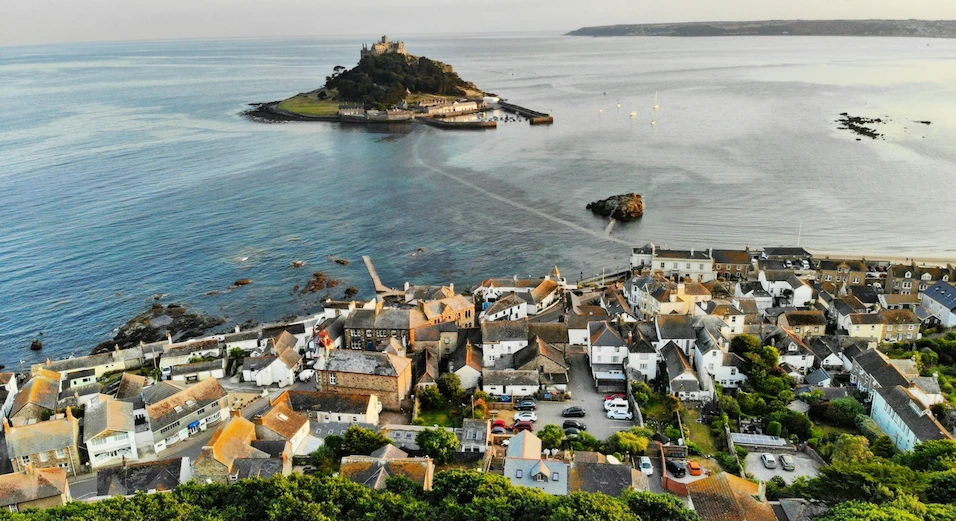
England: the South West
See also our Cornwall, Devon, Dorset and Somerset buying services.
1. Falmouth, Cornwall
Falmouth is that rare and rather wonderful thing: a Cornish town that does not empty in October. A university, a working harbour and one of the world’s deepest natural anchorages give it an economy beyond tourism, and the result is a high street with genuine range: record shops and chandlers alongside the galleries. Gyllyngvase is the swimming beach; the Fal estuary is the reason serious sailors move here. Housing runs from period terraces climbing the hill behind the town, to substantial houses with water views above Swanpool and Maenporth, to flats aimed at the student market that we would generally steer owner-occupiers away from. The market has repriced hard, down 12% on the year, which is precisely why it is on this list.
Best for: creative types, sailors and anyone who wants Cornwall that stays alive through the winter.
Average house price: £362,941 · Prime homes reach: £525,000
At the top of the market, the town record stands at £2,750,000, and the best houses above Swanpool and Maenporth with water views trade comfortably into seven figures.
2. Dartmouth, Devon
Steep, handsome and unmistakably naval, Dartmouth tumbles down to a deep-water estuary that has been a working harbour since the Crusades. The Royal Naval College sets the tone, the regatta sets the calendar, and the town supports an unusually good food scene for its size. The catch is access: there is no station, so allow half an hour to Totnes for the London train, and the hills are not for everyone in later life. It is one of the few towns here where prices actually rose last year, by 12%: a small market, but a sign that the best south Devon addresses have held.
Best for: boat owners and second-home buyers converting to full-time.
Average house price: £473,680 · Prime homes reach: £658,636
The trophy end is a different market again: waterfront houses with their own moorings trade well into the millions, and Redlap House, a coastal estate with its own private cove just outside the town, was listed in 2026 at £13.2 million.
3. Exmouth, Devon
Exmouth is the quietly sensible choice on the south Devon coast. It has two miles of sand, a genuine rarity in the West Country, plus a rejuvenated seafront, a marina and, crucially, a direct railway into Exeter in around 25 minutes, which means employment, hospitals and secondary schools are all in daily reach. It is a proper town rather than a resort, and offers the same coastline as Dartmouth in a more workaday setting. The best stock sits on the Maer and in the Georgian squares near the front; the estuary side is quieter and popular with retirees.
Best for: buyers priced out of Salcombe and Dartmouth who want the same coast.
Average house price: £352,381 · Prime homes reach: £512,136
The prime market is deeper than the average suggests: the town record is £2,250,000, and the seafront houses on Foxholes Hill and the Maer regularly change hands above £1 million.
4. Lyme Regis, Dorset
The Cobb, the fossils and the sheer theatre of the setting have made Lyme famous, but what makes it liveable is a hard-working high street and a community that has kept its shops and its arts programme going through the winters. It is small and it is steep, and the traffic in August is punishing. Buyers should take proper advice on coastal erosion and ground stability, which is a genuine consideration here, not a box-ticking exercise. It is also the most expensive town in the south west on this list, and one Rightmove flagged as falling in 2026.
Best for: downsizers and walkers who want the Jurassic Coast on the doorstep.
Average house price: £518,798 · Prime homes reach: £738,588
The best sea-facing houses on the western cliffs and around the Cobb reach well beyond £1.5 million.
5. Swanage, Dorset
Swanage has the geography of a much grander resort (a sheltered sandy bay, Old Harry Rocks at one end, the Purbeck hills behind) with prices that have never come close to Sandbanks across the water, where the average is comfortably over £1 million. The steam railway is a genuine amenity as well as a charm, the town centre works year-round, and Studland’s beaches are minutes away. The Isle of Purbeck’s road access is the trade-off: it is a long way round, or a short ferry, to Poole and the mainline.
Best for: families who want a beach and a bucket-and-spade childhood within reach of a city.
Average house price: £421,442 · Prime homes reach: £611,085
6. Clevedon, Somerset
Not every coastal home needs turquoise water at the end of the garden. Clevedon offers something rarer and rather charming: sea air, a beautifully restored Victorian pier, a Grade I marine lake, and Bristol within comfortable reach in well under an hour. The Bristol Channel is silty rather than turquoise, and that is precisely why the town remains understated relative to the Somerset villages inland. The Victorian villas on the hills above Hill Road are the prize, and they trade at a discount to equivalent houses in Clifton.
Best for: Bristol professionals who want a coastal address without a coastal premium.
Average house price: £389,198 · Prime homes reach: £569,009
Black Brick’s south-west pick. Beer, on the Devon side of the Dorset border, remains one of the most under-appreciated villages on the Jurassic Coast: a shingle cove, a fishing fleet, a strong community land trust and none of the summer crush of its better-known neighbours.
Average house price (Beer village): £425,199. As with any village this small, that average rests on a handful of sales and moves sharply from year to year, so read it as an indication of level rather than a valuation.
England: the South East
7. Deal, Kent
Deal has pulled off the trick that eludes so many reinvented seaside towns: it has smartened up without pricing out the very people who made it desirable in the first place. The Middle Street conservation area is one of the finest runs of Georgian townhouses on the English coast, the high street has an unusual density of independents, and the pebble beach keeps day-tripper numbers manageable. London St Pancras is roughly an hour and a half. Period stock here is tightly held and rarely cheap, but the market has loosened and there is more choice than there has been for some years.
Best for: architecture-minded buyers who want a town, not a resort.
Average house price: £340,249 · Prime homes reach: £480,000
The seafront is another market again: the Regency houses on Wellington Parade have repeatedly sold between £1.2 and £1.3 million.
8. Whitstable, Kent
The oyster town has been fashionable for the best part of two decades, and it is now the clearest example in England of what happens when the flow of London money slows. Average sold prices are down 11% on the year and sit 11% below the 2022 peak, the largest correction on the Kent coast according to local agents. What sustains the town regardless is a working harbour, a genuinely good independent high street, the beach-hut stretch at Tankerton and a London commute of around an hour and a quarter. For a buyer, this is the definition of a repriced market worth looking at. Seasalter and the streets behind the seafront offer further value.
Best for: part-time Londoners and full-time foodies, buying into a correction rather than a boom.
Average house price: £424,857 · Prime homes reach: £564,942
The seafront addresses, on Marine Parade and Island Wall, are the trophy stock and the best of them sell comfortably above £1 million.
9. Broadstairs and Margate, Kent
Two very different towns, seven minutes apart, and a wide gap in price between them. Broadstairs is the conservative choice: Viking Bay, a tidy centre, good schools and a settled family population. Margate is the interesting one: Turner Contemporary, a restored Old Town, Dreamland and a Cliftonville regeneration story that has been running long enough to be believable. Margate still has real deprivation street by street, so this is a market where the specific address matters enormously; the difference between two roads can be a hundred thousand pounds and a completely different daily life. Both sit on the high-speed line at roughly an hour and twenty minutes.
Best for: Broadstairs for families; Margate for buyers who take care over the specific address.
Average house price: Broadstairs £399,961 · Margate £294,597
Broadstairs’ top end reaches well beyond the average: the North Foreland and Bleak House end of the market has recorded sales around £2 million.
10. Folkestone, Kent
Folkestone has the fastest coastal commute in England, around 53 minutes to St Pancras, and has spent fifteen years and a great deal of private investment turning a declining ferry port into a working arts town. The Creative Quarter, the Harbour Arm and the Triennial are real, not marketing. The Leas remains one of the great Victorian promenades, and the clifftop apartments there are the standout stock. It has also been one of the most stable markets on this coast, holding roughly level with its 2022 peak while Whitstable fell 11%. The value against Whitstable is still striking: a materially bigger house for a train twenty minutes quicker.
Best for: commuters who want the shortest possible train and the biggest possible house.
Average house price: £321,508 · Prime homes reach: £368,460
11. Hastings and St Leonards, East Sussex
The most interesting property market on the south coast. Hastings Old Town, the net huts and the fishing fleet give it a texture no reinvented resort can manufacture, and St Leonards has become the address for buyers who found Margate too expensive and Brighton impossible. Marine Court and the Burton townhouses offer scale that would cost three times as much sixty miles west. Both towns held their value through the past year, Hastings flat and St Leonards up 2%, while smarter neighbours fell. It remains a town of sharp contrasts, and the schooling question needs answering carefully before you commit. About an hour and a half to Charing Cross.
Best for: buyers who want space, character and genuine upside.
Average house price: Hastings £306,223 · St Leonards-on-Sea £310,767
12. Bexhill-on-Sea, East Sussex
Bexhill is the calm next door: the De La Warr Pavilion, a long flat promenade, Edwardian stock in generous plots and prices that remain gentle next to Sussex’s inland villages. It has an older demographic and a gentler pace, which is either the appeal or the objection depending on the buyer. The town has quietly attracted a younger cohort from Hastings, and the Edwardian seafront flats are among the most characterful on the south coast.
Best for: retirement, downsizing and anyone who wants a flat walk to the sea.
Average house price: £336,368 · Prime homes reach: £477,860
13. Southsea, Hampshire
Southsea gives you a city’s amenities with a beach at the end of the road. Independent shops, a serious coffee and restaurant scene, a huge common, and the constant traffic of the Solent to watch. Old Portsmouth’s period houses are the prime stock, a handful with a grandstand view of naval ships coming and going. Prices here have been flat for four years, which in this market counts as strength. Waterloo is a direct train.
Best for: urban types who do not want to give up the city to gain the sea.
Average house price: £282,933 · Prime homes reach: £400,000
14. Lymington, Hampshire
Where the New Forest meets the Solent, with two marinas, a cobbled high street and a Saturday market that has run since the thirteenth century. Lymington is the most established prime coastal address in Hampshire, with the demand profile to match: buyers arrive from London and from further west, and good houses in the town’s Georgian streets are chased. It is also a textbook example of the second-home correction: the average is 16% below the 2022 peak, the steepest fall of any town in this guide. The trophy end is another market entirely: the town record stands at £12.5 million for The Salterns, and waterfront houses on the best moorings still change hands well above £8 million. The Isle of Wight ferry runs from the quay; Waterloo is roughly two hours via Brockenhurst.
Best for: sailors, and buyers who want forest and coast in the same postcode.
Average house price: £532,010 · Prime homes reach: £850,000
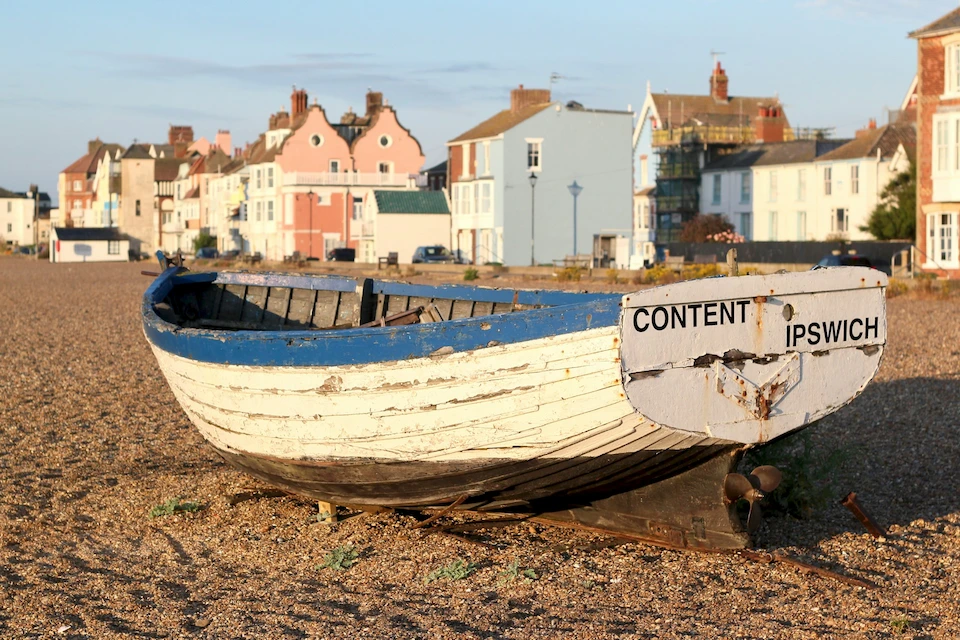
England: the East
15. Aldeburgh, Suffolk
Aldeburgh is unusually cultured for a small coastal town, as Snape Maltings and the festival attest, and unusually disciplined architecturally, with pastel-fronted houses running the length of a steep shingle beach. Lloyds has ranked it among Britain’s priciest coastal locations, alongside Sandbanks, Salcombe and Padstow. Seafront houses on Crag Path are the trophy stock, and the best of them are quietly marketed well beyond £1.5 million. Second homes are a real presence, but the year-round community is robust enough to keep the shops and the arts calendar going. The streets behind the High Street are where most people actually buy.
Best for: cultural buyers with a London base.
Average house price: £621,048 (detached sales too few for a reliable prime average; the best seafront houses trade well beyond £1.5 million)
16. Southwold, Suffolk
The lighthouse in the middle of town, the pier, the beach huts that trade for the price of a flat elsewhere, and a brewery at the centre of local life. Southwold is as pretty as English seaside gets. It is also the most volatile market in this guide: the twelve-month average is 30% down on the previous year and 36% below the 2023 peak, which reflects a very thin market and a change in the mix of what sold rather than a genuine collapse in values. It is wise to establish street-level comparables here before drawing conclusions from the headline average. Walberswick across the Blyth offers the same coast with fewer visitors.
Best for: buyers who want the classic English seaside town, and who will do the comparables properly.
Average house price: £532,653 (a very thin market; the finest houses on the green trade well into seven figures, such as Stone House, which was marketed at £2.75 million)
17. Frinton-on-Sea, Essex
Frinton has spent a century keeping the twentieth out, and the result is a greensward, a wide sandy beach and a town notably free of arcades. Prices are low for a beach this good and a commute this manageable, around an hour and a half to Liverpool Street. The Avenues contain substantial detached houses that would cost several times as much in Suffolk, for a beach most people would say is better than Aldeburgh’s. The trade-off is a quiet, conservative town that will not suit everyone.
Best for: value hunters and retirees who want sand rather than shingle.
Average house price: £364,727 · Prime homes reach: £550,000
18. Wells-next-the-Sea, Norfolk
The best of the north Norfolk coast in a single town: a working quay, a mile of sand backed by pinewoods, the famous beach huts and Holkham’s vast beach next door. It is expensive and the second-home share is high, but Wells has more year-round infrastructure than Burnham Market or Blakeney, which is why we favour it for buyers intending to live here rather than visit. Flint cottages and the Georgian houses on the green are the target stock.
Best for: full-time buyers who want north Norfolk without the ghost-village problem.
Average house price: £436,168 · Prime homes reach: £600,000
England: the North
19. Tynemouth, Tyne & Wear
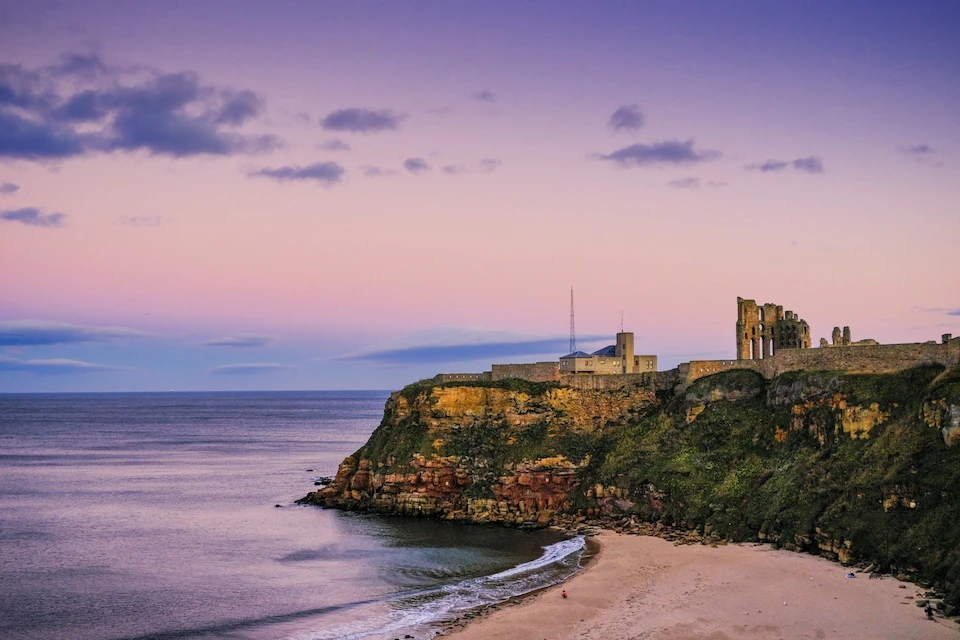
Tynemouth is one of the happiest surprises on this list. Longsands is a genuinely world-class urban beach, the Metro puts central Newcastle around half an hour away, and the schools are strong. Front Street and the Victorian station market give it an atmosphere most commuter suburbs would kill for. It is the most expensive town in the north of England on this list, yet still costs less than a two-bedroom flat in much of the south east. Prices are 10% off last year, which is an opening.
Best for: anyone who wants a beach lifestyle on a working salary.
Average house price: £406,368 · Prime homes reach: £506,005
The grand seafront terraces are the trophy stock: the town record is £1,550,000, set on Percy Gardens overlooking Long Sands.
20. Saltburn-by-the-Sea, North Yorkshire
A Victorian resort that never got tacky. The cliff lift, the pier and the grid of “jewel streets” are the architectural draw; the beach and its surf are why a younger population has arrived. Valley Gardens gives the town a green heart. Prices eased 11% over the year in a small market where a few sales move the average. Limited prime stock means patience and a readiness to move fast when the right house on Victoria Terrace appears.
Best for: surfers, and buyers who want a good-looking town at a northern price.
Average house price: £238,734 · Prime homes reach: £246,250
21. Whitby, North Yorkshire
Whitby earns its living from the sea and from visitors, and it manages both without losing itself. The abbey, the harbour, the fishing fleet and the Georgian west cliff make it one of the most distinctive towns on this list. Transport is the weakness: the rail link is scenic rather than useful, and the roads across the moors are slow in winter. Buy on the east side for character, the west cliff for views and space.
Best for: buyers who want a real working town rather than a resort.
Average house price: £250,072 · Prime homes reach: £350,000
22. Lytham St Annes, Lancashire
Two towns in one, sitting on the Fylde coast a world away from Blackpool a few miles north. Lytham has the green, the windmill, the boutiques and the championship golf, and sits well ahead of St Annes on price, which tells you where the money is. Preston and the West Coast mainline are close, Manchester is commutable, and the Edwardian housing stock offers square footage that would be unthinkable in the south east. Prices are level with 2022, which on this coast counts as a strong result.
Best for: golfers and families wanting space at northern prices.
Average house price: £284,426 (Lytham alone: £367,734)
Lytham’s own top end runs higher still: the record on Seafield Road stands at £1,700,000.
23. West Kirby, Wirral
The marine lake is the centre of life here: sailing, paddleboarding and one of the best sunset views in England, straight down the Dee towards Wales. Add Hilbre Island, an excellent grammar school offering and a Merseyrail line into Liverpool in around half an hour, and West Kirby makes a strong case as the best family coastal address in the north west. Hoylake next door is slightly cheaper and improving. Worth noting that Merseyside coastal towns led Britain for asking-price growth in 2026. This stretch of coast is moving in the opposite direction to the expensive south.
Best for: families prioritising schools and a genuine commute.
Average house price: £377,696 · Prime homes reach: £500,000
The best seaside towns in Wales
24. Tenby, Pembrokeshire
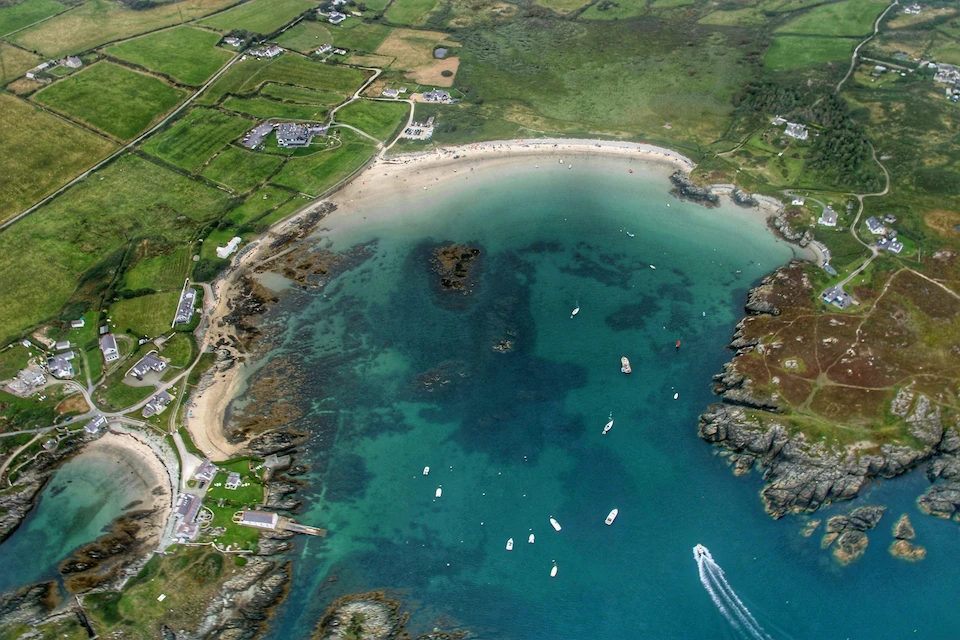
The walled town with the pastel harbourfront is the picture-postcard image of Welsh seaside, and it has three beaches to back it up. Tenby works year-round better than most Pembrokeshire towns, with a hospital, schools and a proper retail centre. It is busy in season and the second-home debate is live in Wales, where council tax premiums on second homes run higher than in England and are a real factor in the sums. Georgian houses on the Croft and the Esplanade are the prime stock.
Best for: buyers who want beaches, walls and an actual town.
Average house price: £358,055 · Prime homes reach: £467,625
25. Mumbles and Gower, Swansea
The Gower was Britain’s first designated Area of Outstanding Natural Beauty and still looks it: Rhossili’s three miles of sand, the cliffs at Pennard, the surf at Llangennith. Mumbles is the urbane end: a pier, a run of good restaurants and easy access to Swansea. Langland and Caswell are the premium bays and priced well above the Mumbles average; the villages on the north Gower coast offer far better value for buyers who do not need a beach view.
Best for: surfers, walkers and Swansea commuters.
Average house price: £336,642 · Prime homes reach: £450,000
26. Llandudno and Rhos-on-Sea, Conwy
Llandudno is the grandest Victorian resort in Wales, with a sweeping promenade, the Great Orme, a tramway and a pier, and it has the retail and medical infrastructure of a much larger town. Rhos-on-Sea next door is quieter and increasingly where the families go, with a small harbour and a long flat seafront; the two towns are within £12 of each other on average price, so the choice is purely about character. The A55 puts Chester within reach and the Conwy Valley is minutes away. Among the best-value coastal living in Britain.
Best for: retirement and value, with Eryri on the doorstep.
Average house price: Llandudno £245,471 · Rhos-on-Sea £245,483
27. Aberdyfi, Gwynedd
Where Eryri comes down to meet the sea. Aberdyfi sits on the north bank of the Dyfi estuary with a long sandy beach, a championship links course and views that change hour by hour. It is remote, the Cambrian coast line being charming and slow, and the second-home share is significant, but the year-round community is stronger than the visitor numbers suggest. Tywyn, four miles north, offers the same coastline for far less and is a serious option for anyone who does not need the Aberdyfi name.
Best for: buyers who want mountains and sea, and do not need to commute.
Average house price: £302,111 (Tywyn: £197,771)
The best seaside towns in Scotland
28. North Berwick, East Lothian
North Berwick may be the most complete coastal town in Britain. It has two sandy beaches, a working harbour, the Law rising behind the rooftops, world-class golf, the Bass Rock just offshore, and a train into Edinburgh Waverley in about half an hour. The high street is thriving, the schools are good and Fringe by the Sea has given the town a genuine cultural calendar. All of which is priced in: North Berwick is the most expensive town in this guide, well above the Edinburgh city average, and the £1 million-plus market grew through 2025 even as prime sales cooled elsewhere in Scotland. At the very top, homes on the Archerfield estate have sold for around £5 million. Stock is fiercely competed for and Scottish sales run through the offers-over system, so budget for a premium over the home report valuation.
Best for: Edinburgh commuters who want the best of everything and will pay for it.
Average house price: £576,805 · Prime homes reach: £856,087
29. Portobello, Edinburgh
Portobello is Edinburgh’s own beach, barely two miles from the city yet a world away in feel. The promenade is car-free, the sand is real, and the tenements and townhouses behind it have become the address of choice for young Edinburgh families and creatives. The bookshop, the bakeries and the swim community give it a village feel inside a capital city. It is no longer the bargain it was ten years ago, with sold prices up more than 9% on the year, among the fastest-rising districts in the city, but relative to Stockbridge or Morningside it still reads as value.
Best for: city life and sea air, without choosing.
Average house price: £380,000 (source differs from the rest of the table; see note below)
30. The East Neuk, Fife
The string of fishing villages along the Fife coast (Elie, St Monans, Pittenweem, Anstruther, Crail) is one of the great runs of vernacular architecture in Britain: crow-stepped gables, red pantiles, harbours still in use. The reopened Levenmouth railway has materially improved access to Edinburgh, and St Andrews is close for schooling and golf. Each village has a distinct character and price point, and the spread is wide: Anstruther, the largest and most self-sufficient, averages £270,967, while pretty, smaller Crail averages £352,380. Elie sits above both.
Best for: buyers wanting a village with a working harbour and a real winter population.
Average house price: Anstruther £270,967 · Crail £352,380
The best seaside towns in Northern Ireland
Northern Ireland is the fastest-moving market in the UK right now, with prices rising 5.2% annually to an average of £240,758 in PropertyPal’s early-2026 snapshot, with Causeway Coast & Glens among the strongest districts at 8.9%. Buyers looking for value on a coastline should be looking here before it reprices.
31. Portstewart, Co Londonderry
The Causeway Coast at its best: two miles of National Trust strand you can still drive onto, a Victorian promenade, and championship golf at Portrush a few minutes away. Coleraine provides the schools and the retail, Belfast is comfortably under two hours, and prices remain remarkable by mainland standards. It is also one of the busiest sales markets in its district.
Best for: golfers and buyers who want space, sand and value.
Average house price: Northern Ireland does not publish town-level sold-price averages on the same basis as the rest of the UK. Portstewart sits in the Causeway Coast & Glens district, where the NISRA standardised average was £185,720 in Q4 2025, up 8.3% on the year. As a sought-after coastal town, Portstewart itself trades well above its district average.
32. Holywood, Co Down
A genuine coastal commuter town: fifteen minutes into Belfast by train, with Belfast Lough at the bottom of the hill and the Holywood Hills behind. The high street is one of the best in Northern Ireland, the schooling is strong, and the housing stock ranges from Victorian terraces to substantial detached homes in mature gardens. Holywood, Cultra and Helen’s Bay together form the most expensive stretch of the Belfast commuter belt.
Best for: Belfast professionals and families.
Average house price: Holywood sits in the Ards & North Down district, where the NISRA standardised average was £222,712 in Q4 2025, the second-highest in Northern Ireland after Lisburn & Castlereagh. Holywood, Cultra and Helen’s Bay sit at the very top of that district, so expect to pay a clear premium over the average for a house in the town itself.
Every town, ranked by average house price
| Town | Region | Average price | Prime homes reach | Notable movement |
|---|---|---|---|---|
| North Berwick | East Lothian | £576,805 | £856,087 | Most expensive in this guide |
| Aldeburgh | Suffolk | £621,048 | n/a* | Among Britain’s priciest coastal towns |
| Southwold | Suffolk | £532,653 | n/a* | |
| Lymington | Hampshire | £532,010 | £850,000 | |
| Lyme Regis | Dorset | £518,798 | £738,588 | |
| Dartmouth | Devon | £473,680 | £658,636 | +12% YoY |
| Wells-next-the-Sea | Norfolk | £436,168 | £600,000 | – |
| Whitstable | Kent | £424,857 | £564,942 | |
| Swanage | Dorset | £421,442 | £611,085 | – |
| Tynemouth | Tyne & Wear | £406,368 | £506,005 | |
| Broadstairs | Kent | £399,961 | £555,562 | |
| Clevedon | Somerset | £389,198 | £569,009 | – |
| Portobello | Edinburgh | £380,000 | £550,000 | +9.4% YoY |
| West Kirby | Wirral | £377,696 | £500,000 | – |
| Frinton-on-Sea | Essex | £364,727 | £550,000 | |
| Falmouth | Cornwall | £362,941 | £525,000 | |
| Tenby | Pembrokeshire | £358,055 | £467,625 | – |
| Exmouth | Devon | £352,381 | £512,136 | |
| Crail (East Neuk) | Fife | £352,380 | £600,000 | – |
| Deal | Kent | £340,249 | £480,000 | – |
| Mumbles | Swansea | £336,642 | £450,000 | – |
| Bexhill-on-Sea | East Sussex | £336,368 | £477,860 | – |
| Folkestone | Kent | £321,508 | £368,460 | Level with 2022 peak |
| St Leonards-on-Sea | East Sussex | £310,767 | £400,000 | +2% YoY |
| Hastings | East Sussex | £306,223 | £420,000 | Flat YoY |
| Aberdyfi | Gwynedd | £302,111 | £450,000 | – |
| Margate | Kent | £294,597 | £337,667 | |
| Lytham St Annes | Lancashire | £284,426 | £553,354 | Level with 2022 |
| Southsea | Hampshire | £282,933 | £400,000 | Flat |
| Anstruther (East Neuk) | Fife | £270,967 | £450,000 | +7% YoY |
| Whitby | North Yorkshire | £250,072 | £350,000 | |
| Rhos-on-Sea | Conwy | £245,483 | £350,000 | – |
| Llandudno | Conwy | £245,471 | £409,292 | – |
| Saltburn-by-the-Sea | North Yorkshire | £238,734 | £246,250 | |
| Portstewart | Co Londonderry | Causeway Coast & Glens district: £185,720 | n/a (district data) | District +8.3% YoY (NISRA Q4 2025) |
| Holywood | Co Down | Ards & North Down district: £222,712 | n/a (district data) | 2nd-highest NI district (NISRA Q4 2025) |
For context, Lloyds puts the average British coastal home at £295,991, and the ONS put the UK average at £271,000 in May 2026.
“Prime homes reach” is the average sold price of detached houses in each town over the twelve months to spring 2026, from the same Land Registry and Registers of Scotland data as the overall averages. It is a guide to what the better family houses in a town command, not the ceiling: the very top of each market runs far higher, and where we have verified a town’s record sale we give it in the write-up above (Lymington reaches £12.5m, Dartmouth £3.3m, North Berwick £5m, and so on). Where marked with an asterisk (Aldeburgh, Southwold), so few detached houses change hands that the detached average is statistically unreliable, and the overall figure is the truer guide. Northern Ireland does not publish this breakdown on a comparable basis.
Which coastal towns are best for commuting to London?
Roughly ranked by fastest scheduled journey to central London. Check current timetables before you rely on these:
| Town | Terminus | Approx. fastest journey | Average price |
|---|---|---|---|
| Folkestone, Kent | St Pancras (HS1) | ~53 min | £321,508 |
| Whitstable, Kent | St Pancras / Victoria | ~1h 15 | £424,857 |
| Broadstairs, Kent | St Pancras (HS1) | ~1h 20 | £399,961 |
| Deal, Kent | St Pancras (HS1) | ~1h 25 | £340,249 |
| Frinton-on-Sea, Essex | Liverpool Street | ~1h 30 | £364,727 |
| Hastings, East Sussex | Charing Cross | ~1h 30 | £306,223 |
| Southsea (Portsmouth), Hampshire | Waterloo | ~1h 40 | £282,933 |
The arbitrage is obvious: Folkestone is twenty minutes closer to London than Whitstable and £103,000 cheaper. If you are buying for the commute rather than the postcode, that is the trade worth making. Our buyer’s guides cover how to approach a relocation search like this.
Which are the best coastal towns for families?
Judged on schools, year-round community and somewhere for children to actually go:
West Kirby (grammar schools and a marine lake), Tynemouth (beaches plus a Metro into Newcastle), Broadstairs (the safest, tidiest Thanet option), Swanage (a genuine bucket-and-spade childhood), Exmouth (sand, watersports and Exeter’s schools), North Berwick (everything, at a price).
Which are the best coastal towns for retirement?
The criteria change in later life: a flat walk to the shops, a hospital within reach, and a community that does not disappear in winter.
Bexhill-on-Sea: level, well served, and one of the most liveable spots on the south coast. Llandudno: resort infrastructure and a proper hospital. Frinton-on-Sea: quiet, safe and flat. Exmouth: mild, level along the estuary, with a train to Exeter’s hospitals. Lytham St Annes: golf, greenery and generous Edwardian houses. The very steep towns are worth approaching with care in later life: Dartmouth and Lyme Regis are beautiful, but demanding underfoot.
Which are the most exclusive seaside towns in the UK?
If budget is not the constraint, the competition is. These are the addresses where the best houses rarely reach an open-market listing, and where a buying agent earns their fee on access rather than negotiation.
- North Berwick, East Lothian: the most expensive town in this guide, sold under Scotland’s offers-over system, so the asking price is only a starting point.
- Aldeburgh, Suffolk: ranked by Lloyds among Britain’s priciest coastal locations, alongside Sandbanks, Salcombe and Padstow.
- Lymington, Hampshire: detached houses average over £800,000, and the Georgian streets in the town rarely come up.
- Wells-next-the-Sea, Norfolk: the flint cottages and houses on the green are the tightly held stock on the north Norfolk coast.
- Sandbanks and Canford Cliffs, Dorset: not on our list, because we would not recommend either as a place to live rather than to own, but worth knowing that both now average over £1 million and both have fallen this year.
For couples and downsizers wanting somewhere smart but liveable year-round, we would point to Deal, Lytham or Bexhill long before any of the above.
Which up-and-coming seaside towns are worth watching?
Not every worthwhile coastal address is already established. These are the places where regeneration, scarcity or a shift in the buyer profile is changing the picture, and where an early move may look prescient in a decade.
- St Leonards-on-Sea, East Sussex: the most convincing regeneration story on the south coast, and one of the few here that rose last year.
- Cliftonville, Margate: street-by-street, but the direction is clear.
- Hoylake, Wirral: West Kirby’s quieter neighbour, on the stretch of Merseyside coast leading Britain for asking-price growth in 2026.
- Tywyn, Gwynedd: the same stretch of Cambrian coastline as neighbouring Aberdyfi, with more room to move.
- Seasalter, Kent: Whitstable-adjacent and quieter, in a stretch that has just seen an 11% price correction.
- The Causeway Coast, Northern Ireland: the fastest-growing coastal district in the UK, from a low base.
Frequently Asked Questions
What is the best seaside town to live in the UK?
On a balance of beach, high street, schools and transport, North Berwick in East Lothian is hard to beat, with a half-hour train from Edinburgh, two sandy beaches and a thriving town centre. At an average of £576,805 it is also the most expensive town in this guide. In England, Tynemouth offers the best combination of coastline and value.
Which coastal town has the fastest train to London?
Folkestone, at around 53 minutes to St Pancras on the high-speed line. Whitstable, Broadstairs and Deal all sit within about an hour and a half.
Is 2026 a good time to buy a coastal property?
Conditions favour buyers more than at any point since 2019, but selectively. If you are buying at the top of the market, where the correction has landed hardest, you have real leverage. If you are buying value, where prices are already rising again, move sooner rather than later.
Why have coastal house prices fallen?
Three things at once: the second-home council tax premium (100% in England, higher in parts of Scotland and Wales), the increase in the stamp duty surcharge on additional properties from 3% to 5%, and the unwinding of the pandemic “race for space”. Savills’ prime coastal index fell through 2025 but declines slowed to just 1.5% in the final quarter, suggesting the adjustment is largely done.
What is the poshest seaside town in the UK?
By average sold price, North Berwick (£576,805) and Aldeburgh (£621,048) top this guide, though neither approaches Sandbanks or Canford Cliffs in Dorset, where averages now exceed £1 million. Expensive and liveable are not the same thing: our own preference for buyers who want somewhere smart and genuinely year-round is Deal, Lymington or Lytham.
Are Britain’s seaside resorts worth living in, or just visiting?
It is the single most useful question to ask before you buy. A resort optimised for August, with its arcades, seasonal high street and holiday-let stock, can feel very different in February. Every town in this guide was selected on the opposite test: whether it has a working high street, a school run and a year-round population. That rules out a good number of the UK’s best-known seaside destinations.
What should I watch out for when buying on the coast?
Coastal erosion and flood risk (check the Environment Agency’s long-term flood risk service and the relevant shoreline management plan), the cost and availability of buildings insurance, salt and weather exposure on the building fabric, second-home council tax premiums in your target authority, and, most importantly, whether the town has a genuine winter population. In thin markets like Southwold or Beer, published averages can move 30% on a handful of sales, so insist on street-level comparables.
Thinking about a move to the coast or country?
Choosing where to live by the sea is one of the most enjoyable decisions in property, and one of the easiest to get wrong. Everywhere looks wonderful in July. The real work lies in going back in February to find out what floods, what the neighbours are like, how the light falls, and what a vendor genuinely needs to move. A good buying agent does exactly this, quietly and on your behalf, long before you ever make an offer.
Black Brick advises private clients buying beyond London across the West Country, the Home Counties and the Cotswolds. In the words of our Managing Partner, Camilla Dell:
“We can assist clients looking at buying properties across the West Country, Home Counties and Cotswolds. Our clients tend to be British, looking for holiday or weekend homes, or relocating from London for more space and a more rural lifestyle. Typical budgets we assist with range from £1 million upwards in the West Country and £2 million upwards for searches in prime Surrey and the Cotswolds property markets. Buying a property in the country or coast has its own set of challenges: it is exceptionally time consuming and can cover large areas. Most of our clients have busy lives, and do not want to waste days driving miles to see a property that looked wonderful on a website but in reality turned out to be a huge disappointment. As with London, often the best homes are not being advertised on a portal and so contacts, and off-market access, are essential for success. Most properties we source in the coast and countryside are off market. Finally, having an advisor that understands value is essential. Working out what to pay for a country or coastal property is much more challenging than in London, with fewer comparables and more than just the property to consider. Our highly experienced buying agency team has a deep understanding of how acreage and different types of land affect values.”
Camilla Dell, Managing Partner
Our Regional Director for Devon, Dorset and Somerset, Rupert Stephenson, adds:
“The property market in the West Country currently offers some excellent opportunities and value at the moment but, as Camilla rightly says, knowing what a property is worth and ensuring that it has all the right ingredients to retain its value in an ever-changing landscape takes time, experience and tenacity. A good buying agent adds huge value to a search and ensures their clients can navigate the complex coast and country marketplace safely.”
Rupert Stephenson, Regional Director for Devon, Dorset and Somerset
Our regional directors Anna Sharp (Cornwall) and Rupert Stephenson (Devon, Dorset and Somerset) work with active client lists across the West Country, and the wider team advises on searches in prime Surrey, Hertfordshire, Henley, Kent and the Cotswolds. See how we work or get in touch for a confidential, no-obligation conversation.
A selection of our country and Home Counties work
Most of what we source never reaches a portal. A few examples of our work beyond London, across the Home Counties and the Cotswolds:
- The Lakes by Yoo, the Cotswolds (Gloucestershire, 2025): a 6,000 sq ft new-build residence with six bedrooms, a pool and lake views, sourced off-market in a secure gated development with 24/7 concierge, and with the contents negotiated into the purchase.
- Country estate, Surrey (2021): a rare private estate the selling agent told us not to bother bidding on. We gazumped the buyer already under offer and exchanged on Christmas Eve.
- Kingwood Place, Henley (2010): an 11,000 sq ft house on a private 22-acre estate with pool, tennis court and equestrian facilities, secured with a 16.7% saving on the asking price.
- The Hermitage, Tonbridge, Kent (2015): a 7,100 sq ft home on 4.1 acres with a walled garden, pool and tennis court, for a couple leaving London, at just £242 per sq ft.
- Overbye, St George’s Hill, Surrey (2013): with no existing house on the estate up to standard, we acquired a plot and agreed a build contract with Octagon to create a home tailored to our client.
- Neville Avenue, Coombe, Surrey (2011): sourced entirely off-market for a high-profile client, secured 9% below asking with £200,000 of contents included.
- Beech Close, Cobham and Selbourne Place, Weybridge: further Surrey acquisitions, the latter a new-build plot secured directly from the developer two months before launch.
- Englemere, Ascot and Emberton Court: a luxury Berkshire apartment secured £150,000 below asking, and a turn-key residential investment where we negotiated a total saving of £420,000.
See all of our case studies for the full record.
Sold-price averages for Great Britain are for the twelve months to spring 2026, taken from HM Land Registry (England and Wales) and Registers of Scotland (official Crown-copyright data published under the Open Government Licence) and accessed in July 2026, except Portobello (OnTheMarket, April 2026). Northern Ireland does not publish town-level sold-price averages on a comparable basis, so the figures given for Portstewart and Holywood are the NISRA standardised averages for their respective council districts (Causeway Coast & Glens and Ards & North Down) for Q4 2025, not town-level figures. Averages in small markets are volatile and are a guide to the level, not a valuation; buyers should always seek street-level comparables before offering. Journey times are approximate fastest scheduled services and should be verified against current timetables. All figures were correct at the time of writing and are liable to change.