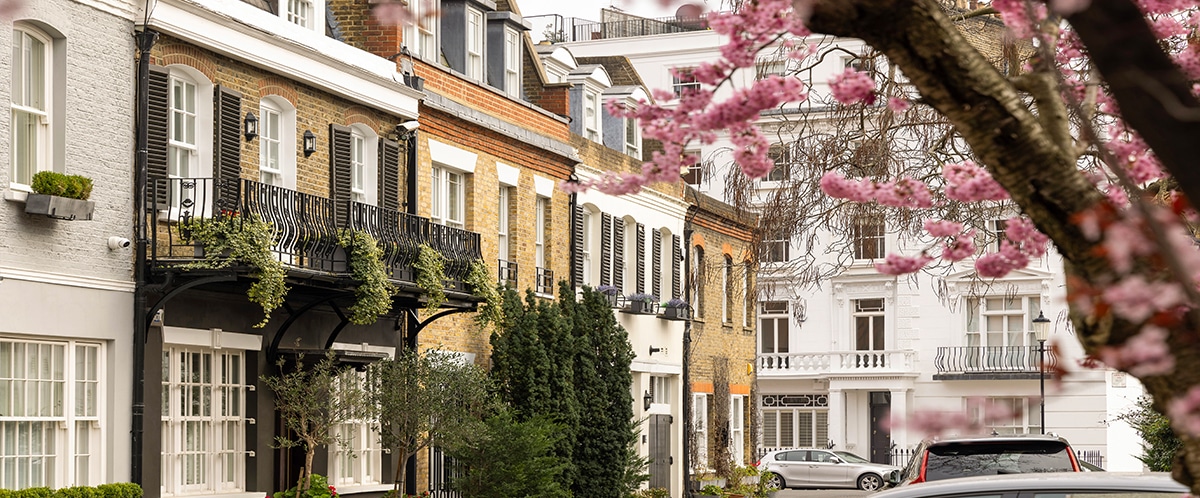

Record numbers of people from the United States and Canada are choosing to buy property in London – according to research by estate agent Hamptons, North Americans now make up 19 per cent of all overseas-based applicants property-shopping in the British capital.
North Americans are also the fastest-growing international buyer segment, up from 15 per cent of applicants in the first quarter of 2025, and more than double the proportion of a decade ago.
The driving forces behind this uptick in demand include the strength of the dollar against the pound, which has made London property prices more appealing than they have been for generations, and disquiet over the United States’ current political regime. Other buyers are relocating for work – London is currently the world’s second-largest financial hub, and some 2.5m people work in the UK’s financial sector, many based in London’s two financial districts, the City and Canary Wharf.
Americans also love London for its history and culture, for our shared language, and the British capital’s comparative safety.
For US buyers and re-locators considering a transatlantic purchase, this is Black Brick’s ultimate America to London relocation guide.
In this relocation guide, we’ll cover the following topics:
- Understanding the London property market
- How U.S. buyers can navigate the property market in London
- Using a buying agent for relocation services
- Taxes and considerations with currency exchange
- Most popular London neighbourhoods to consider
- Settling into the London lifestyle
Understanding the prime London property market
American neighbourhoods tend to have clearly defined margins. In London, boundaries are more blurred as its historic neighbourhoods have evolved over hundreds of years.
Prime Central London is a relatively modern construct and while all property experts have their own definitions, most agree that its original neighbourhoods border Hyde Park: Notting Hill, Kensington, Knightsbridge, Belgravia, and Mayfair. But during the early part of the 21st century new pretenders have grown in stature, popularity, and price. For both British and international buyers postcodes like Marylebone, St James’s Park, Westminster, and South Kensington are now very much on the prime radar.
Then there is prime outer London, an eclectic collection of neighbourhoods beyond PCL. Prime outer outposts can be found all around the capital, from charming, villagey Hampstead in the north, affluent Clapham in the south, riverside Richmond and Barnes in the southwest, rapidly regenerating Earl’s Court offering value for money in west London, and hipster-friendly Shoreditch in East London.
How U.S. buyers can navigate the buying process
In the U.S. it takes, on average, 30 to 45 days to close on a property purchase once you are under a contract. UK buyers can only dream of such speed.
According to property portal Zoopla it takes three to 12 months to find your perfect property. Once you have found it and negotiated a price, you can expect to spend between six weeks and three months on the legal process to purchase the property, during which time you will have condition surveys and legal checks carried out, deal with any financing required, and have all the paperwork drawn up.
If you are buying an apartment matters can be even more complex because most UK apartments are sold on a leasehold basis, which means you are agreeing to buy the property for a set period of time. Leases set out not only the length of the lease but building rules and whether you will be expected to pay an annual ground rent to the freeholder, and your lawyer will need to go through the fine print with a toothcomb.
Much can go wrong during this period – in inner London almost a third of home sales fall through before completion, according to property analyst TwentyCi. Reasons for this vary but the most common problems are one of the parties changing their mind, difficulties with finance, or structural problems with the property which emerge during the process.
Camilla Dell, managing partner at Black Brick comments, “At Black Brick, we take a lot of the risk out of the buying process. Fall throughs for our well experienced team are highly unlikely. We take time to ensure that proper due diligence is done prior to exchanging contracts, such as surveys and bringing in other specialists for more complex properties, so there are no hidden surprises. We also scrutinise pricing and carefully negotiate to ensure our clients are well informed and don’t start to feel they are overpaying for a property once their offer is accepted. We also carefully manage and oversee the due diligence and legal process for our clients, ensuring lines of communication flow, and the deal progresses in a smooth and orderly way.”
For U.S. buyers looking to navigate a property purchase in London, it is crucial to keep the sale process moving as fast as possible to reduce the time in which your vendor has to reconsider – or even accept a higher offer from another buyer, a perfectly legal practice in the UK known as gazumping.
Relocation made easier through a buying agent
When it comes to relocating, timing is everything. Whether you plan to buy or rent you will be working to a set timeframe. At Black Brick, we know when our clients will be moving and when they will need their new home to be ready and waiting for them. We are experts at working under pressure and within our clients set timeframes. With such a complicated, slow process to navigate, it is vital to have someone on the ground to keep matters moving along.
Another crucial difference between buying property in the UK vs the U.S. is that estate agents are instructed by vendors, and they act in their interests. Buyers have a stark choice. Either go it alone, and hope for the best, or hire a seasoned buying agent to act for them.
Camilla Dell comments, “I often say that going into the London property market without a buying agent is like going to court without a lawyer. You would never dream of representing yourself.”
A good buying agent should have a long track record, a forensic understanding of the pros and cons of London’s diverse neighbourhoods, and an in-depth knowledge of the qualities of its individual buildings. Specialising in relocation services, a buying agent can not only help with the leg work, presenting a shortlist of potential properties, but guide you on pricing and how to handle negotiations.
Camilla continues, “The rise in the trend for off market selling is not going away anytime soon. So far this year, 6 in 10 properties we have sourced for our clients have been off market. Above £3 million, this rises to 73%. The same is true for rentals. Supply is thin, and often we have to get quite creative to find the right rental properties for our clients, approaching sellers who may not have previously considered renting, but are happy to rent to one of our represented clients”.
And, in a market where 50 to 60 per cent of homes in prime central and outer London are sold off market – and do not show up on property portal search – buying agents can also offer access to homes you would not be able to find out about on your own. This benefit is important to domestic buyers, but almost essential for those overseas looking to relocate or invest.
Taxes and considerations with currency
Exchange rates fluctuate, but over the past five years the pound’s weakness has made London property look like good value to those buying in U.S. dollars.
During that period rates hit a high point in May 2021 at just over $1.40 to £1, fell to $1.08 in autumn 2022 and as of summer 2026 stood at around $1.32 to the pound, saving today’s buyers significant sums compared to those purchasing in the early 2000s.
On the flip side the UK does have a habit of imposing higher taxes on overseas buyers, where US relocators and investors should expect to pay Stamp Duty, the UK’s main buying tax, of up to 19 per cent of the purchase price above £1.5 million. The exact levy depends on the cost of the property and whether it is a second home or not.
The good news is that the UK doesn’t charge annual property taxes (local councils do levy a Council Tax to pay for services, but this rarely exceeds £3,000 per year). And when you come to sell you may have to pay Capital Gains Tax on any profits.
Changes are however coming regarding council tax. From April 2028, High Value Council Tax Surcharge (HVCTS), often called a “mansion tax”, will come into effect. This is an additional annual levy for owners of residential properties in England valued at £2 million or more. The surcharge sits on top of your existing Council Tax and will not replace it. The amount depends on the property’s 2026 valuation:
- £2m – £2.5m: £2,500/year
- £2.5m – £3.5m: £3,500/year
- £3.5m – £5m: £5,000/year
- £5 million+: £7,500/year
Popular central neighbourhoods in London
One of the great things about London is that it is a city made up of individual villages, each with a distinct character of its own.
Right now, American buyers are particularly active in charming, slightly bohemian Notting Hill, with its beautiful garden squares and great range of restaurants and bars. Others prefer Chelsea, with its slightly more peaceful vibe and concentration of designer boutiques and high end restaurants.
St John’s Wood, home of the American School in London, has long attracted a strong U.S. contingent, who love its leafy streets, historic villas, and charming high street. Film director George Lucas is a recent addition to the St. John’s Wood community, paying £40m for a house there in 2025.
You can find out more about London neighbourhoods in our area guides, which cover everything from luxury prime property to lesser-known hidden gems.
Settling into London – lifestyle, schools and beyond
U.S. expats adore London’s diverse range of cultural activities – from opera and fine art, to pop, rock, and street graffiti, there is something new to discover every night of the year.
The capital has wonderful open spaces, a strong sporting heritage, all the history you could possibly want. It is generally considered safe, and it has a mass transit system which works – most of the time.
Britain’s school system is admired around the world, and Imperial College London and UCL are ranked in the top ten higher education institutions in the QS World University Rankings.
And because generations of Americans have made London their home, there is a strong expat community to welcome you with open arms.
Camilla concludes, “London has so much to offer, from world class west end shows, concerts, restaurants and sporting events, to wonderfully British fixtures such as Royal Ascot, Wimbledon, Chelsea Flower Show and Good Wood. That’s why we now offer our clients access to a dedicated Black Brick Concierge who can pretty much gain access to the inaccessible! From securing reservations at sought-after restaurants and access to sold-out events, to arranging travel, private memberships and recommendations across London and beyond, we take care of the details that make life easier. Whether you’re visiting for a few days or living in London full-time, everything is handled seamlessly – so you can focus on enjoying your time.”
Black Brick are here to help buyers and investors from the U.S., whether you’re looking to relocate or join the London property ladder. Simply get in touch with your requirements, or call us on +44 203 1419 861.