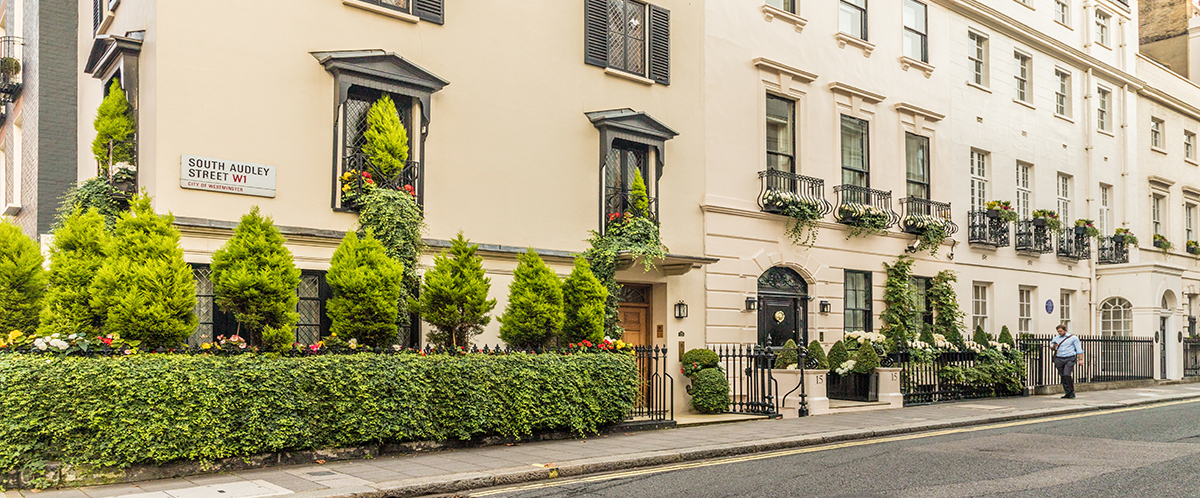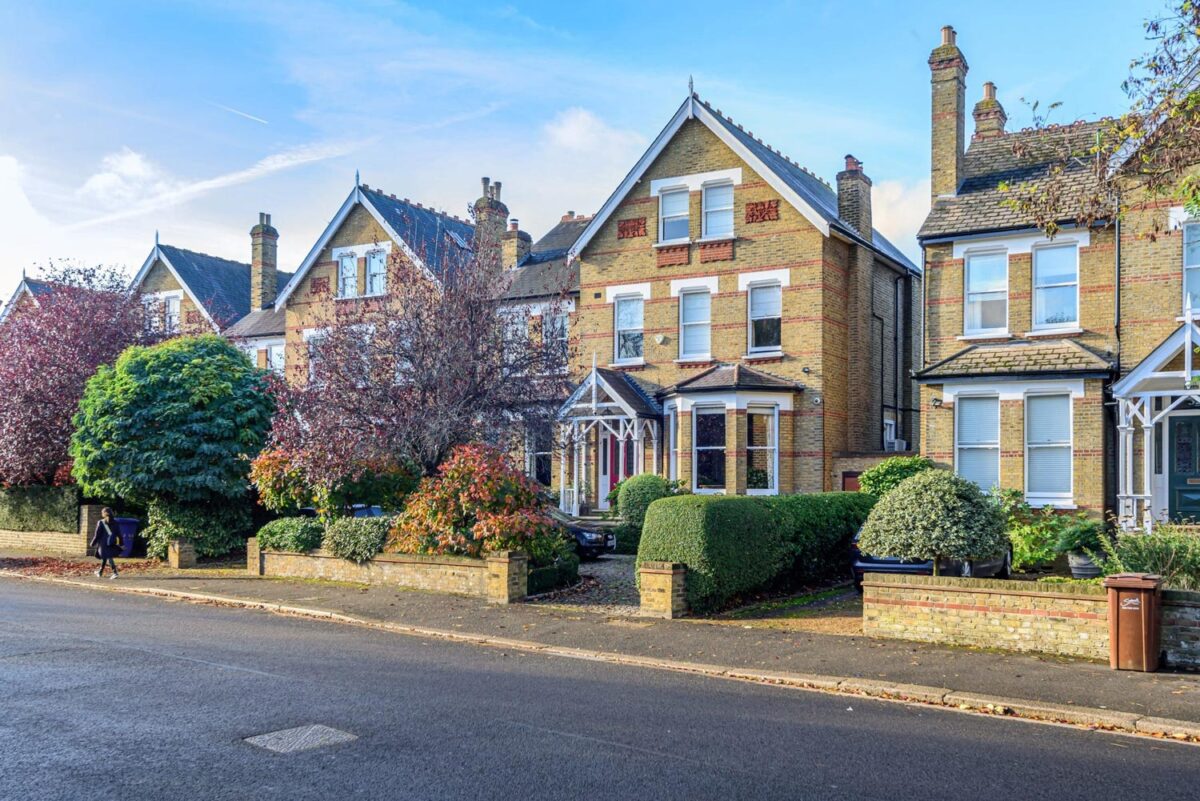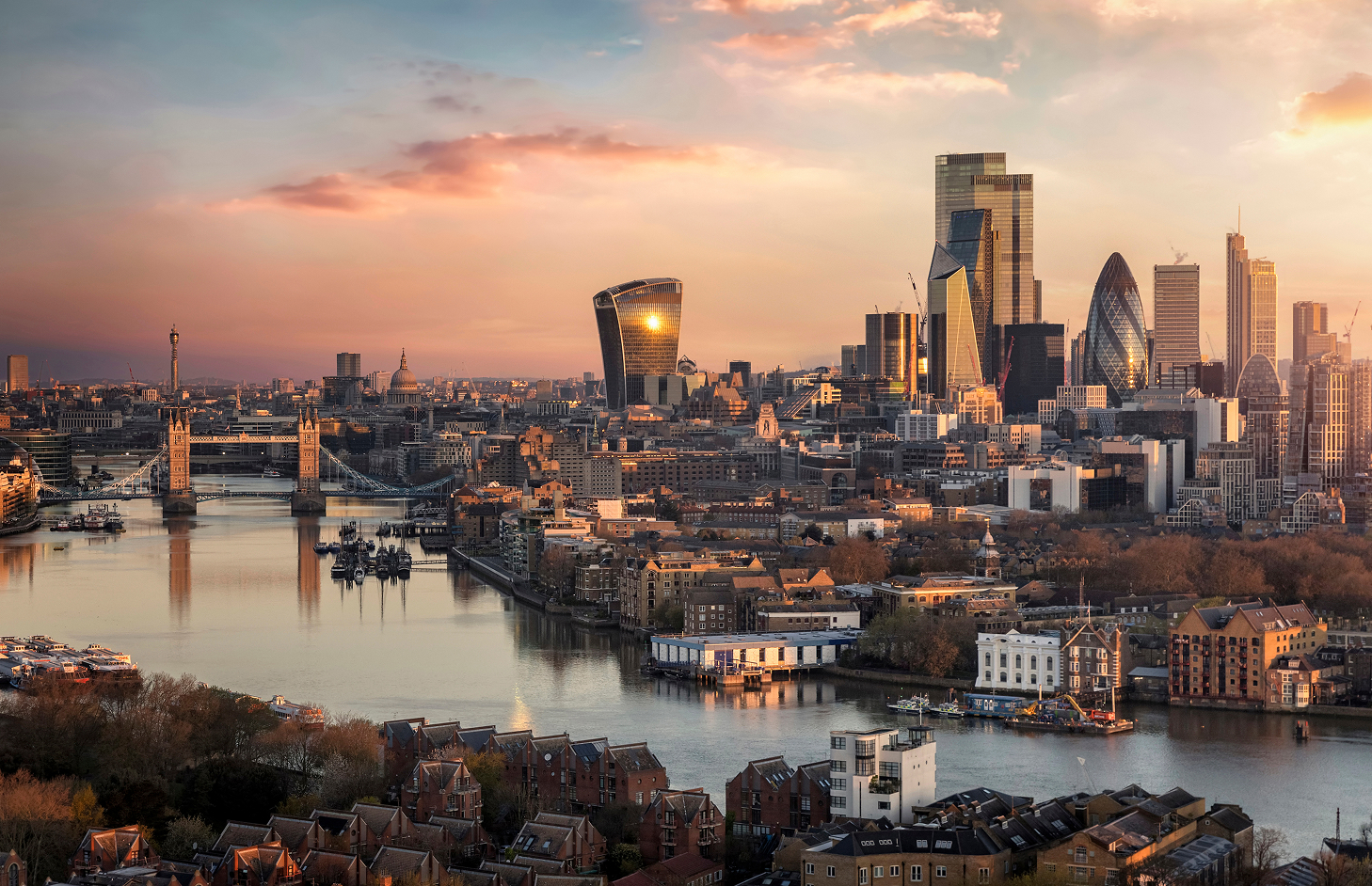

London property budgets translate into very different homes from one postcode to the next. In Prime Central London, £1m is often the entry point for a compact apartment, while the same budget can buy around twice the space in parts of outer London. At £5m and £10m, the choice shifts towards prime townhouses, lateral apartments and larger family homes, but buyers still trade centrality against space, condition and specification.
This guide compares what four common budgets can buy across London. The examples are indicative rather than formal valuations: the exact price of a home will depend on its street, tenure, condition, outlook, service charges and whether it is a new build.
London Property Budgets at a Glance
| Budget | Prime Central London | Beyond Prime Central London |
|---|---|---|
| £1m | A compact one-bedroom or roughly 500 sq ft apartment in the most expensive central districts. | Around 750 sq ft in Hampstead or just over 1,000 sq ft in Wimbledon, depending on the exact location. |
| £2m | A spacious two-bedroom period apartment, a one-bedroom new-build home or, occasionally, a mews house. | A quality family house in areas such as Dulwich, with more living space and access to schools and green space. |
| £5m | A four- or five-bedroom townhouse in Marylebone or Notting Hill, or a two-bedroom new-build apartment in Marylebone or Bayswater. | A four- to six-bedroom family house in St John’s Wood, potentially with a garden and parking. |
| £10m | A medium-sized Mayfair townhouse or a high-specification apartment with three or more bedrooms. | A larger townhouse in Notting Hill or South Kensington, or a detached home with extensive gardens in Highgate. |
These examples describe typical options rather than fixed price bands. Individual properties can sit well above or below local averages.
What £1 Million Buys in London
Seven figures might sound like a substantial budget, but within Prime Central London it is very much a starting price. A £1m buyer will usually be considering a compact apartment rather than a house.
The Investec Property Index 2026 found that 2025 asking prices averaged £1,980 per sq ft in Chelsea, £1,857 in Knightsbridge and £1,828 in Kensington. On those broad averages, £1m equates to roughly 500 to 550 sq ft before purchase costs. Modern, highly serviced buildings and new developments can command a substantial premium, so the same budget may buy less space.
The budget stretches further beyond the most expensive central postcodes. Investec recorded an average of £1,329 per sq ft in Hampstead, equivalent to around 750 sq ft, and £983 per sq ft in Wimbledon, equivalent to just over 1,000 sq ft. That could mean a large apartment or a compact two-bedroom house, although prices vary considerably within both areas.
Price per Square Foot by Area
| Area | 2025 average price per sq ft | Approximate space for £1m |
|---|---|---|
| Chelsea SW3 | £1,980 | About 505 sq ft |
| Knightsbridge SW7 | £1,857 | About 540 sq ft |
| Kensington W8 | £1,828 | About 545 sq ft |
| Hampstead NW3 | £1,329 | About 750 sq ft |
| Wimbledon SW19 | £983 | About 1,015 sq ft |
Source: Investec Property Index 2026. Space estimates are rounded and exclude Stamp Duty Land Tax and other purchase costs.
Wimbledon Village illustrates why postcode averages require care. Its shops, cafes and proximity to open space carry a premium: apartments can be priced at up to £2m, while small two-bedroom cottages may be listed well above £1.5m.
What £2 Million Buys in London
Black Brick’s buyers are active in the sub-£2m market, where the choice is often between a central London pied-a-terre and a family home in a well-established residential area with good schools and access to open space.
Prime Central London Options
Within half a mile of Hyde Park, the options are limited if a house is essential. Buyers may find a characterful mews cottage around Notting Hill or Holland Park, but apartments offer more choice. A £2m budget can secure a spacious two-bedroom mansion-block apartment in Marylebone like this one we sourced in Montagu Court W1 or a period conversion with original features in South Kensington like this one that we sourced on Queen’s Gate Terrace SW7. Buyers who prefer a new build are more likely to be looking at a one-bedroom home because of the premium attached to new developments.
Family Homes Beyond Central London
Outside Prime Central London, £2m starts to open up quality family houses. The trade-off is a longer journey into the centre in return for more bedrooms, a garden and easier access to schools and open space.
Black Brick recently helped a young family move from a flat to a house in Dulwich Village. We secured a 1,865 sq ft red-brick semi-detached home for £50,000 below its £2m asking price, which worked out at a little over £1,000 per sq ft. Read the Dulwich Village acquisition case study.
What £5 Million Buys in London
With £5m to spend, buyers are firmly in Prime Central London house territory. In established areas such as Marylebone or Notting Hill, the budget can secure one of London’s tall period townhouses, typically with four or five bedrooms and a small rear garden. Off-street parking remains rare. An example of a traditional period house in prime Notting Hill that we sourced is this one on Lansdowne Road W11 and a more modern house on Clay Street in Marylebone W1.
Apartment buyers could consider a two-bedroom home in a new development in Marylebone or Bayswater. The capital’s most expensive super-prime buildings in Mayfair or Knightsbridge may still be beyond reach, but a period conversion can offer substantially more space and, in some cases, park views for the same budget. Here is an example of a stunning 2 bedroom apartment we secured for a client on Mount Street in Mayfair W1.
In St John’s Wood, around 2.5 miles from the West End, £5m can buy a four- to six-bedroom family house with a good-sized garden and, depending on the street and property, off-street parking. We recently secured a large family house with garden, off street parking in a secure gated development on Regent’s Mews NW8 for a client.
What £10 Million Buys in London
A £10m budget provides a broad choice at the top end of the London market. In Mayfair, buyers can consider a medium-sized townhouse in good condition or a high-specification apartment with three or more bedrooms. In Notting Hill or South Kensington, the same money may buy a larger townhouse with as many as six bedrooms. Examples we have sourced include this stunning house in Notting Hill, backing onto communal gardens on Arundel Gardens, W11 and this stunning lateral apartment in one of the most sought after mansion blocks in Kensington, York House W8.
Further north, the budget reaches the upper end of the Highgate and Hampstead markets. Buyers may find a substantial detached Victorian house with extensive gardens and room for amenities such as a gym, cinema room or swimming pool.
At this level, the homes advertised on property portals represent only part of the market. In 2025, 73% of the properties Black Brick secured above £3m were never publicly advertised. Learn more about Black Brick’s property buying service.
How to Prioritise Your London Property Budget
There is an old property adage that buyers should choose the worst house on the best street they can afford. The wording is blunt, but the principle is sound: a property can often be altered, while its location cannot. The right balance will depend on how long you plan to own the home and how you intend to use it.
- Location and micro-market. Compare neighbouring streets and postcodes, not only broad area averages. Transport, schools, noise, outlook and local amenities can all affect value and resale demand.
- Space and layout. Focus on usable space as well as total square footage. A well-planned lateral apartment can work better than a larger home arranged over several narrow floors.
- Condition and specification. New-build and turnkey homes usually carry a premium. A property that needs work may offer better value, provided the renovation budget, planning position and timescale are understood before purchase.
- Tenure and running costs. For flats, review the lease length, service charge and planned major works. For houses, allow for ongoing maintenance, particularly where the building is listed or unusually large.
London’s many micro-markets give buyers room to adjust without abandoning their priorities. Someone who likes Hampstead but cannot secure the space they need there might look a mile down the hill in South or West Hampstead for a similar atmosphere and access to many of the same schools at a lower price point.
The same approach works in central London. A buyer struggling to find the right home near Sloane Square could consider Chelsea Green, a quieter grid of streets with its own cafes, restaurants and shops and a more residential feel than the King’s Road.
Additional Buying Costs to Include
The headline purchase price is only part of the budget. Buyers should estimate acquisition, ownership and improvement costs before deciding how much to offer.
- Stamp Duty Land Tax. The amount depends on the purchase price, residence status and whether the buyer owns another property. Check the current residential property rates on GOV.UK.
- Professional fees. Allow for conveyancing, searches, surveys, valuations and any specialist legal or tax advice.
- Finance and currency costs. Mortgage, valuation and foreign-exchange costs can affect the funds available for the purchase.
- Refurbishment and furnishing. Obtain realistic estimates before exchange, particularly where structural work or listed-building consent may be required.
- Ongoing ownership costs. Service charges, insurance, property management, staffing and routine maintenance should be assessed alongside the purchase price.
Finding the Right London Property for Your Budget
Buyers working to a fixed budget benefit from advice that tests value at street and property level, rather than relying on a single postcode average. Black Brick uses recent comparable sales to help clients focus on the locations where their priorities and budget align, then negotiates on their behalf to reduce the risk of overpaying.
We also account for tax and other acquisition costs and, where a property needs work, can introduce trusted architects, interior designers, surveyors and builders so that the full cost is clear before the purchase proceeds. Find out how Black Brick supports London property buyers.