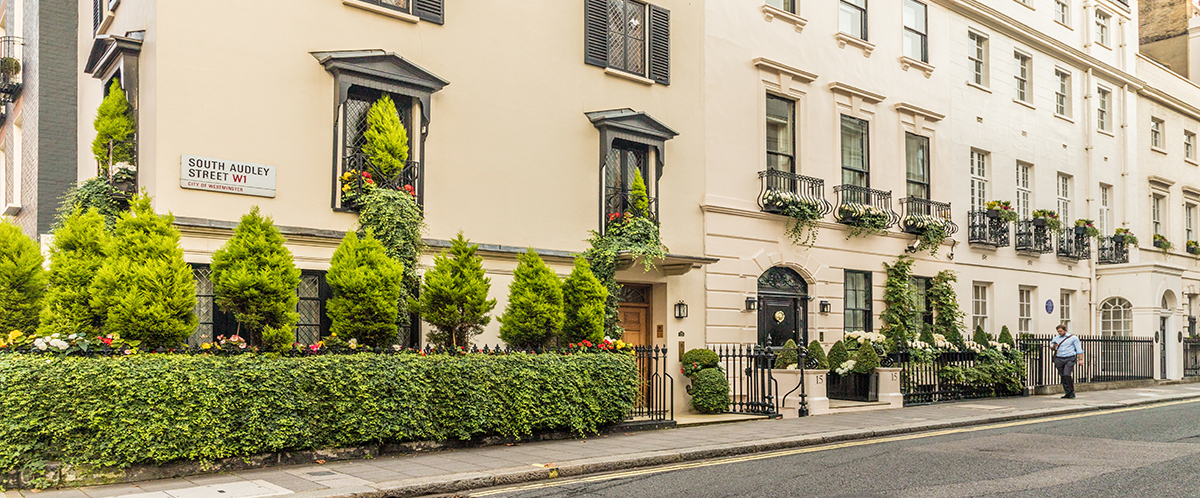

Back in 2007, when Black Brick was founded, the Marylebone neighbourhood was a central London backwater. It has always had lovely architecture and its location just south of the West End is great, but in terms of kudos and desirability its profile was low.
But clever curation of the shops, bars, and restaurants on its once lacklustre high street, the addition of a weekly farmers’ market, and the arrival of some premium new developments has decisively changed its fortunes. Now considered one of the most desirable urban villages within central London, Marylebone is a bona fide property hotspot and one of the best areas to invest in London property.
Spotting the next Marylebone is not an easy task. Much of London is already up and come, meaning there is not the same level of opportunity there once was. But the British capital has a long track record of reinvention and there are certainly neighbourhoods with the potential to rewrite their stories for buyers who want to look beyond traditional prime postcodes.
In this guide
- What Makes an Area an Emerging London Property Hotspot?
- Which London Areas Should Buyers Be Watching?
- Regeneration and Infrastructure: What Is Driving New Demand?
- Where Can Buyers Find Value Close to Established Prime Areas?
- What Should You Consider Before Buying in an Emerging Area?
- Finding London’s Next Prime Neighbourhood
- Sources and useful links
What Makes an Area an Emerging London Property Hotspot?
A property hotspot needs to have good bones.
That means good quality period housing stock, ideally augmented by high quality new buildings, good transport links into the centre of the city, and proximity to green space.
Since the start of the pandemic the quality of the local high street has become increasingly important. People really value having a thriving range of shops, cafes, pubs, and restaurants within easy reach, and their preference is for authentic independent businesses over brands.
Good schools, both state and private, are also a must.
And – crucially – it needs to represent good value for money compared to neighbouring areas, to give it room for price growth as savvy buyers start to recognise its lifestyle benefits and ripple into the area increasing demand. The lower price point makes it a good option for a London property investment.
King’s Cross
The exception to these rules is locations where major investment and placemaking is planned. King’s Cross was a dingy swathe of light industrial land dissected with train tracks and with an unsavoury reputation before developer Related Argent invested some £3bn in reinventing the 67 acres around King’s Cross Station. By filling it not only with stylish apartments but with an outstanding range of open spaces, great restaurants and cafes, cool shops, and public art it has created an ultra-convenient, buzzy environment where, according to Rightmove, average prices stand at more than £770,000, and resale apartments in some of its buildings are being listed up to £3m.
Which London Areas Should Buyers Be Watching?
The fringes of Prime Central London (PCL) tend to be a good hunting ground for buyers looking for price growth in a prime London property location. Buying a home which is PCL-adjacent means that you can easily enjoy all of the lifestyle benefits of a really well established neighbourhood with lots to do, whilst paying significantly less.
Most people define PCL as the postcodes immediately around Hyde Park. The exception, historically, has always been Bayswater, which is just north of the park, between Notting Hill and Mayfair.
Areas covered at a glance
| Area | Hotspot highlights | Buyer consideration |
|---|---|---|
| Bayswater | The Whiteley London and Park Modern; new shops and restaurants; value for money. | Pricing of some landmark developments is punchy; good deals can be struck on resale property. |
| Earl’s Court | A £10bn rebirth; 4,000 homes; open space; cultural and performance venues; shops and restaurants. | Family houses will be in short supply. |
| Bloomsbury | Zone 1; immediately next to Marylebone; lower average prices. | No high street of its own; proximity to Euston Road; high density of students. |
| West Kensington | Average prices are lower than in prime Kensington. | Fewer shops, bars and restaurants; further from Hyde Park; not particularly leafy. |
Bayswater
Although it has a very central location, good transport links, and proximity to the 625-acre open space, Bayswater has always been the Cinderella of PCL for a number of reasons. Proximity to Paddington Station means the area has a transient feel, and far too many cheap hotels. It lacks the kind of smart shopping street that buyers crave. Its de facto high street, Queensway, was crammed full of tourist shops and discount stores.
Change in the area is arriving in the form of a duo of landmark developments, The Whiteley London and Park Modern. The largest penthouse at the £530m Park Modern building sold earlier this year for £57m, a sum which includes the cost of fitting out the shell apartment, was the biggest deal inked across the British capital in more than a year.
The developments are accompanied by new shops and restaurants, there is a Six Senses hotel and residences at The Whiteley, and their arrival has stimulated smaller boutique developments plus independent restaurants and cafes. Meanwhile Paddington Station has had a facelift of its own, and is a stop on the Elizabeth Line giving it fast links to London Heathrow Airport, the West End, the City, and Canary Wharf.
These local improvements are coupled with the area’s value for money. While Black Brick’s view is that the pricing of some of landmark developments is punchy, it is certainly true that there are good deals to be struck on resale property.
Regeneration and Infrastructure: What Is Driving New Demand?
Traditionally regeneration schemes like King’s Cross and, south of the River Thames, the redevelopment of Battersea Power Station have dragged up local house prices, often from an extremely low base.
Earl’s Court
This makes Earl’s Court an interesting proposition for buyers. Once scruffy and filled with budget hostels for travellers, Earl’s Court is at the early stages of a £10bn rebirth. The 44-acre scheme will bring 4,000 homes, mostly flats, plus open space, cultural and performance venues, shops, restaurants, and open spaces. The area, which sits beside the far more expensive Kensington and around a mile from Hyde Park, has some magnificent Victorian town houses and mews houses, and prices in enclaves like Kenway Village – around Kenway Road – are significantly lower than in prime Kensington or Chelsea. While thousands of new apartments will be built in Earl’s Court, family houses will be in short supply and because of this imbalance this kind of home looks like a good mid to long term investment right now.
Where Can Buyers Find Value Close to Established Prime Areas?
If your heart is set on a particular neighbourhood but you can’t quite buy the home you want there, then the time-honoured advice is to look next door for up and coming areas in London you can afford.
Bloomsbury
Recent research by estate agent Hamptons has found that the most inexpensive location to buy in London’s Zone 1 is currently the WC1H postcode, better known as Bloomsbury. Its lack of a high street of its own, proximity to the traffic-ridden Euston Road, and high density of students thanks to the London University campus in the area, means that its average property price starts at £2m for a house and just under £500,000 for a flat. Bloomsbury’s immediate neighbour is Marylebone where, in the W1U postcode, an average house trades at more than £4.2m, and an average apartment at almost £2.2m.
West Kensington
Similarly prime Kensington (W8) has an average sale price of almost £4.4 per cent for houses, and just over £2m for flats. A mile to the west, in the W14 postcode which covers West Kensington, those averages slide to almost £2.7m for the average house, and less than £700,000 for the average flat.
The next-door strategy does, however, have a catch.
Some places are good value for a reason. In the case of W14 it lacks the shops, bars, and restaurants which have made Kensington such a popular place to live for generations. It is also further from Hyde Park, and not a particularly leafy part of town.
Buyers looking for pockets of value within a highly nuanced city need to seek professional advice from a buying agent who really understands the city, and can explain each neighbourhood’s pros and cons and assess their potential for change. Affordability is important, but without this kind of insider information you may find yourself in the right home in quite the wrong location.
What Should You Consider Before Buying in an Emerging Area?
By definition an emerging location is not yet the finished article. You might have spotted the early signs that an area is on the up – new coffee shops and bakeries, houses being remodelled, a thriving cultural scene – but it can take many years for these signs to come to fruition. It can take many years for a location to evolve, and you have to be sure you will enjoy living there in the meantime.
You will find more certainty in a regeneration zone where work has already begun but even then you will need both patience and vision. A major regeneration can take decades to complete, and in a challenging property market progress can be particularly slow. Again you need to assess carefully whether there are enough amenities there for you to enjoy the experience while awaiting major upgrades.
Finding London’s Next Prime Neighbourhood
Spotting a location with the potential to join the ranks of PCL requires a deep understanding of the city’s market. At Black Brick we know which schools are outperforming, which neighbourhoods are in line for a facelift (and in what sort of timeframe), as well as the areas which are quietly becoming fashionable.
Buying a property in an up and coming postcode may be cost effective compared to buying in a more established market, but it is still going to be a major financial decision, and not one which should be made without expert guidance from a buying agent with a long track record in helping secure great homes in the city and in negotiating the best possible price.
Sources and useful links
- Related Argent: King’s Cross regeneration study
- Rightmove: House Prices in Kings Cross
- The Whiteley: The Residences
- Park Modern: official development website
- Transport for London: Elizabeth line information
- Battersea Power Station: The Masterplan
- Earl’s Court Development Company: The Masterplan
- Hamptons: Research