A buying agent’s guide to living in Chelsea: where it is, what each part of it is like, what homes cost, the schools nearby and where the most expensive houses sold this year, with sold prices from HM Land Registry and examples from our own case files.
The short answer Chelsea is a district of south-west London in the Royal Borough of Kensington and Chelsea, between Knightsbridge and Belgravia to the north and east, Fulham to the west and the River Thames to the south. It is one of the most expensive places to live in London. In the year to September 2026, the median price of homes sold in its core postcode, SW3, was £1.15 million: around £922,500 for a flat and £3.55 million for a terraced house. Buyers choose it for its period houses and garden squares, the King’s Road and Sloane Square, its prep schools and a more residential feel than Knightsbridge or Mayfair.
Key Takeaways
Chelsea costs less per square foot than it did ten years ago, so budgets go further here than they used to.
£1.15m
Median price of homes sold in SW3, year to September 2026 (HM Land Registry)
£1,182
Median price per sq ft in Chelsea in 2025, against £1,359 in 2015 (Knight Frank)
684 sq ft
What £1 million buys in Chelsea, against 417 sq ft in Mayfair (LonRes)
- Decide which Chelsea you mean. Old Chelsea by the river, the garden squares north of the King’s Road and West Chelsea in SW10 are priced very differently.
- Houses have held their value better than flats. Across the borough, flat prices are 17% below their 2014 peak and terraced houses 8% (Hamptons).
- Some of the best homes are sold privately. Our client’s Old Church Street flat was let to a tenant and never came to the open market.
- Budget for the £2 million surcharge. From April 2028, homes in England valued above £2 million will pay the High Value Council Tax Surcharge, which will catch most Chelsea houses.
Jump to: Where is Chelsea? · Living in Chelsea · Neighbourhoods · Prices · Most expensive streets · Chelsea compared · Schools · Buying in Chelsea · History · FAQs
Where is Chelsea, and is it in central London?
Chelsea is in central London, about two miles south-west of Westminster, and is part of the area estate agents call prime central London. It runs from Sloane Square in the east to Lots Road and the borough boundary with Fulham in the west, and from the Fulham Road down to Chelsea Embankment on the Thames. Most of Chelsea is in the SW3 postcode; the western end, known as West Chelsea or World’s End, is in SW10, and the streets around Sloane Square and Cadogan Square fall in SW1X and SW1W.
The Underground only reaches the edges. Sloane Square station, on the District and Circle lines, serves the east of Chelsea, and South Kensington, which adds the Piccadilly line to Heathrow, is a short walk north of the Fulham Road. Imperial Wharf, on the Overground, is just over the border in Fulham. Between them, the middle and west of Chelsea can be a 15 to 20 minute walk from a station, so most residents use the buses along the King’s Road, taxis or a bicycle. Victoria and the West End are a short ride away.
What is it like to live in Chelsea?
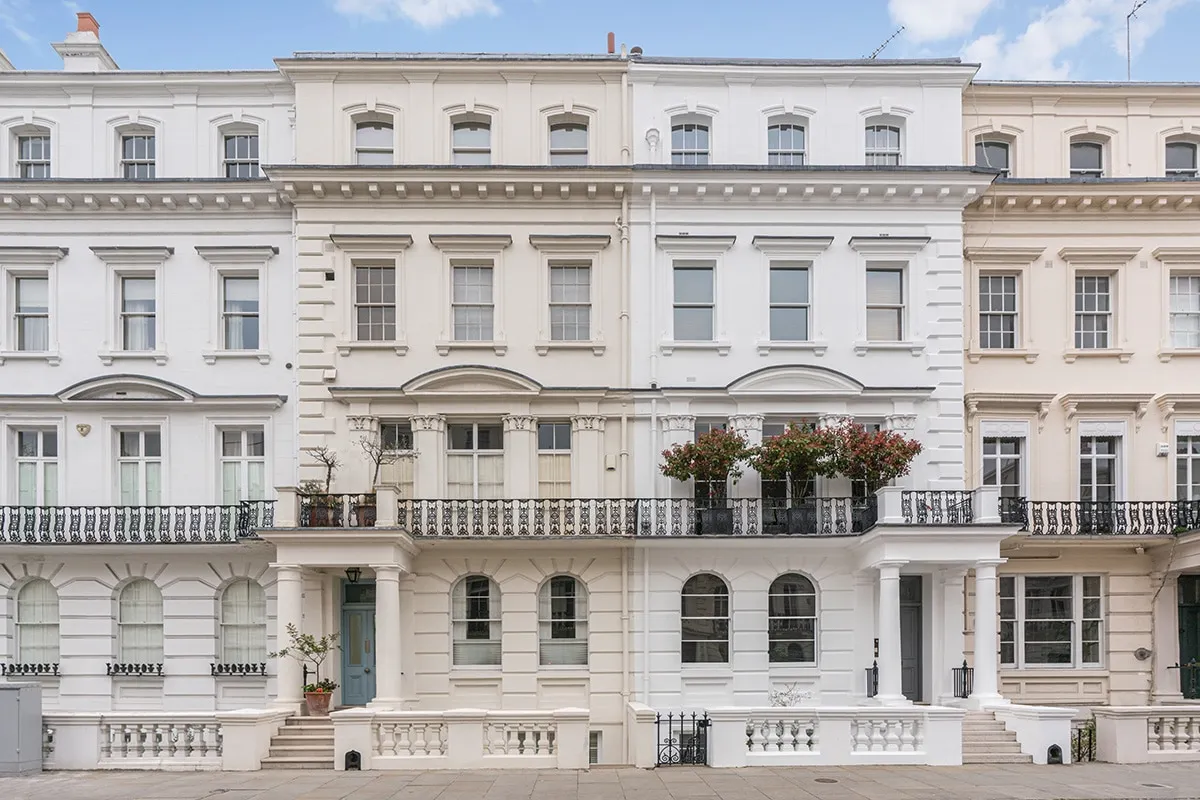
Chelsea is quieter and more residential than Knightsbridge or Mayfair. Most of its streets are lined with period houses and mansion flats rather than shops and offices, and the King’s Road, which runs the length of the district, carries most of the shops, restaurants and traffic. Off it, the side streets are residential, many with private garden squares that only the surrounding houses can use.
Sloane Square is the centre of the east end, with Peter Jones, the Royal Court Theatre and the start of Sloane Street. Next to it, Duke of York Square has the Saatchi Gallery and a Saturday food market, and Pavilion Road, behind Sloane Street, has been turned into a street of independent food shops and cafés by Cadogan, the estate that owns much of the land around Sloane Square and the King’s Road. Further west, Chelsea Green and Elystan Street have the feel of a village high street, and Chelsea Old Town Hall holds antiques and art fairs through the year.
Chelsea also has more green space than its density suggests. The Royal Hospital’s grounds, Ranelagh Gardens and Burton’s Court are close to Sloane Square, Battersea Park is across Chelsea Bridge, and the Chelsea Physic Garden, founded by the Society of Apothecaries in 1673, is London’s oldest botanic garden. Each May the RHS Chelsea Flower Show takes over the Royal Hospital’s grounds, and Chelsea in Bloom fills the shopfronts around Sloane Square with flowers in the same week.

Chelsea’s neighbourhoods
Chelsea is small, but buyers treat it as several distinct areas, and prices vary sharply between them.
| Area | Typical homes | Best for |
|---|---|---|
| Old Chelsea SW3 | Georgian and Victorian houses, red-brick mansion flats, river views | The most prestigious addresses |
| The garden squares SW3 | Period family houses on private communal gardens | Families who want a garden square |
| Chelsea Green SW3 | Cottages and terraced houses around a small green | A village feel close to the King’s Road |
| Royal Hospital SW3 | Georgian terraces and mansion flats near the river | Green space and Sloane Square |
| Sloane Square and Cadogan Square SW1X, SW1W, SW3 | Red-brick Victorian houses and lateral flats | Walking to Knightsbridge and Belgravia |
| West Chelsea and World’s End SW10 | Victorian terraces, mansion flats and new riverside developments | More space for the money |
Old Chelsea
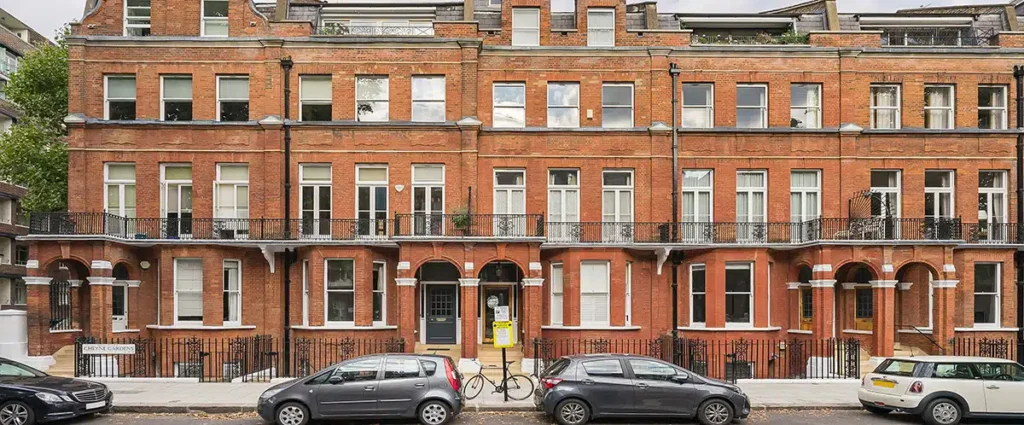
The streets between the King’s Road and the river, around Cheyne Walk and Old Church Street, are the oldest and most expensive part of Chelsea, and are largely conservation areas. Houses here rarely come up, and the larger ones sell for tens of millions of pounds: the highest recorded sales in Chelsea in the past year, on Glebe Place and Old Church Street, were both here. The red-brick mansion blocks around Cheyne Gardens and Cheyne Court give buyers a lateral flat in the same streets for a fraction of the price.
From our case files: Cheyne Gardens: clients working in Victoria wanted a period pied-à-terre with high ceilings in a pet-friendly building. We found a 1,385 sq ft lateral flat stretching across two buildings, and negotiated £85,000 off its newly reduced asking price. They paid £2,515,000, or £1,816 per square foot, in April 2026. On Old Church Street, for a US family who could only visit London for a week, we arranged a one-off viewing of a let flat that was not on the market and bought it for £3,337,000, £158,000 below the asking price.
The garden squares
North of the King’s Road, Chelsea Square, Carlyle Square and Chelsea Park Gardens are built around large private gardens, and the houses that back directly onto them are among the most sought after in London. Markham Square and the streets around it are a step down in price and size.
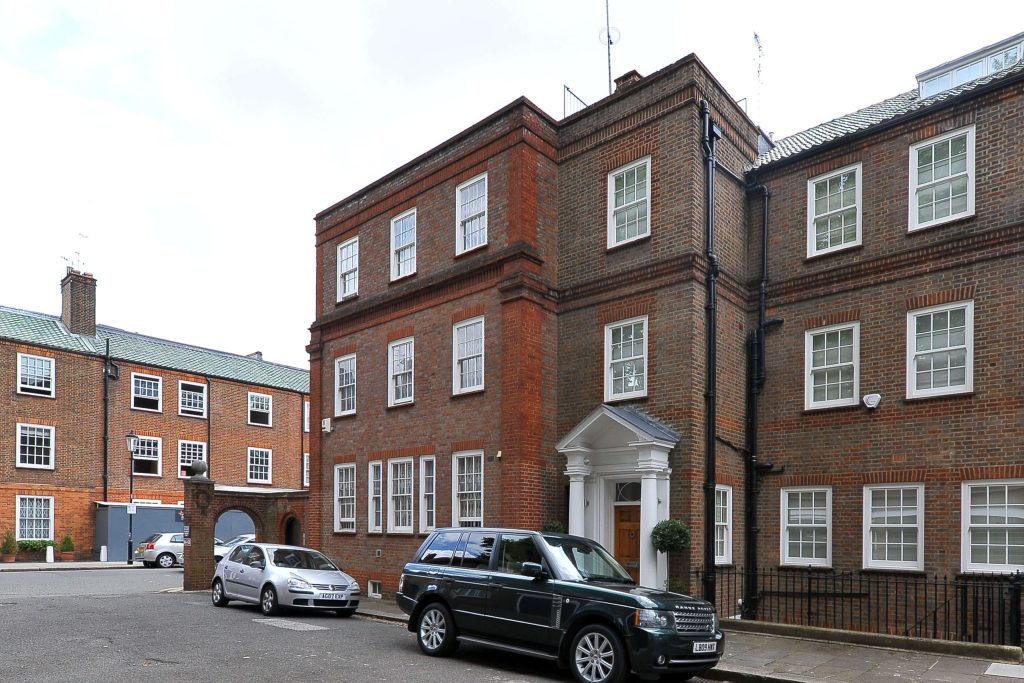
Chelsea Green
Chelsea Green is a cluster of small streets around a triangle of green, with butchers, delis and cafés on Elystan Street. The houses are smaller than in Old Chelsea, but the area has become steadily more popular since its public spaces were redeveloped.
From our case files: Clients who already owned a flat near Sloane Square wanted more space without leaving Chelsea. We found a wide, double-fronted house on Burnsall Street, a short walk from Chelsea Green, that had been in one family for many years. To stop the sale going to sealed bids, we advised them to offer fractionally above the asking price, and they exchanged at £6,300,000, or £2,316 per square foot.
Sloane Square and the King’s Road
The streets closest to Sloane Square suit buyers who want to walk everywhere. Mansion blocks with porters and 24-hour concierges are common here and along Sloane Avenue, which had more recorded sales than any other street in SW3 in the past year.
From our case files: A family buying a first flat for their daughter, a student in London, asked for two bedrooms and two bathrooms in a secure building with a concierge, on a budget of £2 million. We bought a flat in Whitelands House, off the King’s Road near Duke of York Square, for £1,875,000: a 20% discount, or £475,000, on the original asking price. In the same building, we bought a £1,075,000 investment flat for an overseas client who wanted a property that would let well near Sloane Square.
West Chelsea and World’s End
West of Beaufort Street, Chelsea becomes cheaper. SW10 has Victorian terraces, mansion flats and new riverside developments around Lots Road, and the median sale price in the past year was about £320,000 lower than in SW3.
From our case files: A client needed a flat within a ten-minute walk of their children’s school in South Kensington, on a budget of £1.25 million, before their rental ran out. We bought a two-bedroom garden flat on Redcliffe Street in SW10 for £1,250,000, with all the furniture included, so they could move in almost as soon as they exchanged.
Despite its name, Chelsea Barracks, just over the eastern border, is in Belgravia and the City of Westminster. The development will have up to 515 homes when it is finished.
Looking in Chelsea? We can tell you which streets and buildings suit your brief before you start viewing. Talk to our Chelsea team
How much does property cost in Chelsea?
Chelsea is cheaper than it was. Prime central London prices have fallen for most of the past decade, and the latest UK House Price Index puts the average price in Kensington and Chelsea at £1,170,938 in September 2026, 15.6% lower than a year earlier. Sold prices for Chelsea’s own postcodes, from HM Land Registry’s price paid records, look like this:
| Postcode | Median price | Flats | Terraced houses |
|---|---|---|---|
| SW3 Chelsea, 193 sales | £1.15m | £0.92m | £3.55m |
| SW10 West Chelsea, 148 sales | £0.83m | £0.69m | £2.10m |
| Kensington and Chelsea Borough average | £1.17m | £0.93m | £2.28m |
Price per square foot is the better guide for prime homes. Research by Knight Frank, reported in our November 2025 market update, puts the median in Chelsea at £1,182 per square foot in 2025, against £1,359 in 2015. Individual homes vary widely around that figure: our recent Chelsea purchases have ranged from £1,356 per square foot for a flat in Whitelands House to £2,316 for the house on Burnsall Street.
Flats have fallen further than houses. Hamptons research, quoted in our February 2026 market update, found the average flat in Kensington and Chelsea had fallen 17% since the 2014 peak, against 8% for terraced houses.
Where are the most expensive streets in Chelsea?
The highest-value sales registered in Chelsea in the year to September 2026 were mostly in Old Chelsea and on the garden squares:
- Glebe Place, SW3: £25.4 million, for a new-build flat
- Old Church Street, SW3: £23 million, for a terraced house
- Chelsea Square, SW3: £18.6 million
- Chelsea Park Gardens, SW3: £12.7 million
- Carlyle Square, SW3: £8.7 million
- Wellington Square, SW3: £7.4 million
How does Chelsea compare with other prime London areas?
Chelsea gives buyers more space for their money than most of prime central London. LonRes research for our January 2026 market update compared what £1 million buys:
| Area | What £1 million buys |
|---|---|
| Mayfair | 417 sq ft |
| Knightsbridge | 485 sq ft |
| Belgravia | 556 sq ft |
| Marylebone | 596 sq ft |
| Notting Hill | 640 sq ft |
| Kensington | 647 sq ft |
| Chelsea | 684 sq ft |
The gap with Fulham, next door, has narrowed as well. Knight Frank found that homes in Chelsea cost 47% more than in Fulham in 2015, and 21% more in 2025. Against Kensington, Chelsea is the more residential and closer to the river, while Kensington has Kensington Gardens, Holland Park and a larger high street.
Schools in Chelsea
Chelsea has several well-regarded prep schools of its own, and many of London’s leading independent schools are a short drive away in Kensington, Knightsbridge and Battersea. Within Chelsea, the Independent Schools Council lists:
- Garden House School, Turk’s Row, SW3: ages 3 to 11, with boys and girls taught separately. Tatler’s 2027 guide lists fees of £12,202 a term.
- Sussex House, Cadogan Square, SW1X: a boys’ prep school for ages 8 to 13, with fees of £11,820 a term.
- Cameron Vale School, The Vale, SW3: a small co-educational prep school.
The Lycée Français Charles de Gaulle in South Kensington is a short walk from the north of Chelsea. Catchments and admissions change, so check them before you offer. Our guide to the UK schooling system explains how admissions work.
Is Chelsea a good place to buy property?
For many buyers, yes, and it is better value than it has been for years. Our founder, Camilla Dell, said in November 2025: “PCL certainly looks like good value compared to the peak of the market. We are seeing some of our clients opt to buy in more prestigious postcodes as their budgets can go further than before.” A few things are worth knowing before you start:
- The building matters as much as the street. Mansion blocks in the same street can differ widely in their service charges, management and the length of the lease. Read our guide to service charges in prime London before you offer on a flat.
- Flats are almost always leasehold. All but one of the 140 flats sold in SW3 in the past year were leasehold, so check the lease length and who the freeholder is. Much of eastern Chelsea is owned by the Cadogan estate.
- Houses above £2 million will pay more council tax. Kensington and Chelsea’s Band H charge is £3,286.88 for 2026/27, and the High Value Council Tax Surcharge will add to it from April 2028.
- Many of the best homes are sold privately. Houses on the garden squares and in Old Chelsea often change hands without being advertised, so buyers who rely on the portals see only part of the market. Our guide to buying off-market explains how it works.
- Allow for stamp duty. On a £3.55 million house, it is £339,750 if it will be your only home and £517,250 if it is an additional property, with a further 2% for buyers who are not UK resident. Our stamp duty guide and calculator show what you would pay.
Chelsea has long been one of our busiest areas: in 2014, SW3 accounted for 12% of the homes Black Brick bought for clients. Several of the Chelsea buyers in our case files lived abroad or had a main home outside London, and needed someone to search and shortlist between their visits.
A short history of Chelsea
Chelsea was a riverside village outside London for most of its history. Henry VIII had a manor house on the river here, and in 1682 Charles II founded the Royal Hospital Chelsea as a home for retired soldiers, in a building designed by Sir Christopher Wren. It is still home to the Chelsea Pensioners.
By the 19th century Chelsea was an artists’ quarter. J. M. W. Turner, James McNeill Whistler and Dante Gabriel Rossetti all lived on or near Cheyne Walk, and the historian Thomas Carlyle and his wife Jane moved to 24 Cheyne Row in 1834. Their house, kept much as they left it, is now run by the National Trust. In the 1960s the King’s Road became the centre of Swinging London, and Chelsea has kept its fashionable reputation since, although it is now far more expensive and more residential than it was then.
Frequently Asked Questions
Yes. Chelsea is in central London, about two miles south-west of Westminster, and is part of prime central London. It is in the Royal Borough of Kensington and Chelsea, mainly in the SW3 and SW10 postcodes.
Yes. It is one of the most expensive places to live in London. The median price of homes sold in SW3 in the year to September 2026 was £1.15 million, with terraced houses at around £3.55 million. It is cheaper per square foot than Mayfair, Knightsbridge or Belgravia, however.
HM Land Registry records put the median price of homes sold in SW3 at £1,150,000 in the year to September 2026: £922,500 for flats and £3,550,000 for terraced houses. The UK House Price Index average for the whole borough of Kensington and Chelsea was £1,170,938 in September 2026.
The most expensive houses are in Old Chelsea, on Cheyne Walk, Old Church Street, Glebe Place and Mallord Street, and on the garden squares north of the King’s Road, including Chelsea Square, Carlyle Square and Chelsea Park Gardens. The highest sales in the year to September 2026 were on Glebe Place, at £25.4 million, and Old Church Street, at £23 million.
Sloane Square, on the District and Circle lines, and South Kensington, on the District, Circle and Piccadilly lines. Imperial Wharf, on the Overground, is just across the border in Fulham. Much of central and west Chelsea is a 15 to 20 minute walk from a station, so buses along the King’s Road are widely used.
Yes. It has prep schools including Garden House, Sussex House and Cameron Vale, private garden squares, the Royal Hospital grounds and Battersea Park across the river, and many independent schools within a short drive. Family houses are expensive, so families on smaller budgets often look at West Chelsea in SW10.
Chelsea is closer to the river, more residential and gives slightly more space for the money: £1 million buys around 684 sq ft in Chelsea against 647 sq ft in Kensington, according to LonRes. Kensington has Kensington Gardens and Holland Park, Kensington High Street and better Tube links.
For 2026/27, Kensington and Chelsea charges £1,643.44 a year for a Band D home and £3,286.88 for Band H, including the Greater London Authority’s share. From April 2028, homes valued above £2 million will also pay the High Value Council Tax Surcharge.
Buying a home in Chelsea
Our Chelsea buying agents act only for buyers, from the first shortlist of streets and buildings to exchange, and much of what we buy in Chelsea is found before it reaches the market. For more on prime London, see our guides to the areas of prime central London, London’s best riverside areas and buying a pied-à-terre, or read our prime London market guide.
Talk to Us About Your Search
Black Brick acts only for buyers. Since 2007, we have acquired more than £2 billion of property for our clients in London and the Home Counties, and every search is led by a team that includes a Partner.
Notes: Sold prices are standard-price sales registered with HM Land Registry between 1 October 2025 and 30 September 2026 for the parts of the SW3 and SW10 postcode districts in the Royal Borough of Kensington and Chelsea. Recent months are incomplete, because sales can take several months to be registered. The borough average and its annual change are from the UK House Price Index for September 2026. Price per square foot and the Fulham comparison are Knight Frank figures, the £1 million comparison is LonRes research for Black Brick, and the flat and house falls since 2014 are Hamptons research, all as published in our market updates. Council tax is from the Royal Borough of Kensington and Chelsea. School details are from the Independent Schools Council and Tatler. Case study prices and dates are as at the time of each purchase. Last reviewed 23 November 2026. This guide is general information and not financial, legal or tax advice.